Manufacture/Licence building
Licence building
How making someone else's design under agreement turned a workshop into an industry.
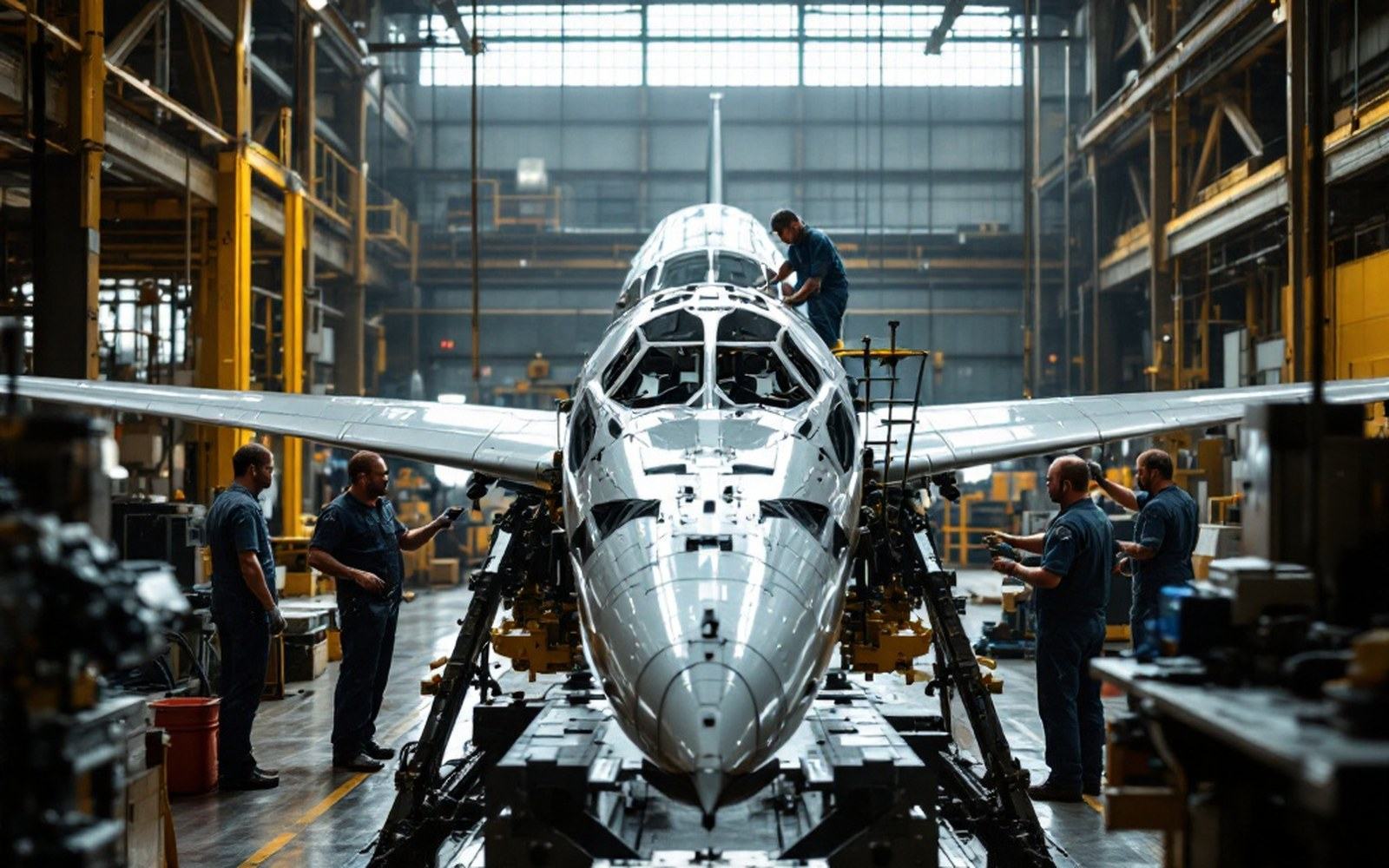
Other people’s drawingsBuilding to licence is how the jigs, the tooling and the workforce were created.
The logic of the copy
Before a country can design its own aircraft, it needs people who know how to build them. The bluntest way to acquire that knowledge is to make an aircraft someone else has already proved — working from approved drawings, with the original manufacturer's oversight, on a machine whose problems have already been solved. Spain's early aeronautical industry understood this clearly, and licence production was not an embarrassment but a deliberate strategy.
CASA, founded in 1923 at Getafe, outside Madrid, was from the outset an organisation built for licensed manufacture. Its first significant work was building Breguet 19 reconnaissance aircraft under arrangement with the French firm; the drawings arrived with the design authority's approval, and the workforce learned to read and honour them. What looks like deference was in fact an apprenticeship in tolerances, in the discipline of the jig — the fixed frame that holds components in precise relation while they are assembled — and in the quality controls that keep a fleet of aircraft interchangeable. You cannot repair a machine in the field unless its parts are made to the same standard as every other example, and that discipline is acquired by making copies before you make originals.
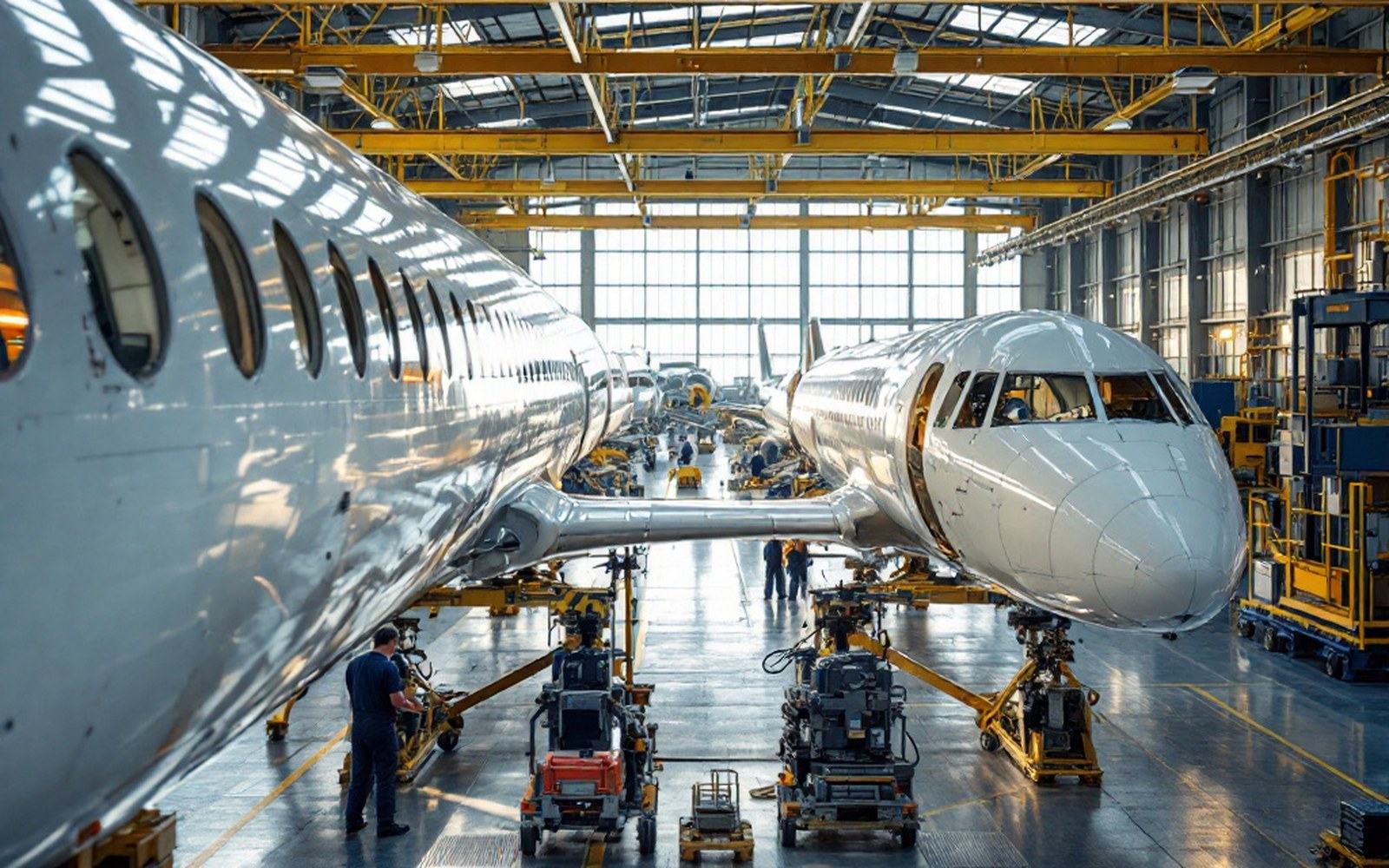
An industry, not a workshopFuselage frames in line under gantries: building to volume needed tooling before it needed designs.
The pattern repeated with other types and other arrangements. The licence was the contract, but the real transfer was tacit: how a spar is fitted, where a weld is acceptable, what a correctly tensioned control run feels like. None of that appears in the drawings. It lives in the hands of the people who have made the thing before, and it moves sideways — from the foreign instructor to the Spanish foreman, then down the workshop floor.
What the rotor work added
The autogiro introduced a different kind of complexity. Juan de la Cierva's machines were built in Britain by the Avro company under licence from his own Cierva Autogiro Company, and the Spanish connection ran in the other direction: the design originated in Spain, the manufacture happened abroad, and then sub-licences went to other countries. The engineering detail that made those arrangements possible — the flapping hinge that resolved dissymmetry of lift in a forward-flying rotor, the drag hinge that absorbed the blade's lead-lag motion — was precisely the kind of feature that a licensee had to understand rather than merely copy. A builder who did not grasp why the hinge was where it was would not be able to maintain it, let alone improve it.
That pressure pushed Spanish engineers toward understanding rather than transcription. Emilio Herrera Linares ↗, trained as a military engineer, engaged seriously with the aerodynamic theory behind early rotorcraft, which is one reason the technical conversation around the autogiro had Spanish voices in it from the beginning. Licence building, when it is done seriously, does not suppress local engineering — it provokes it, because the questions the drawings cannot answer have to be answered somehow.
CASA's later work — developing its own types, eventually feeding into what became Airbus Defence and Space ↗ — was possible because the workforce and the tooling culture already existed. The Museo del Aire at Cuatro Vientos holds machines from across this span, and the range of types on its floor — licensed, adapted, original — is a readable history of the transition. The drawings and archives behind them are where the detail of what was transferred, and what was changed, can still be traced.
Tube, sheet and stockEach material brought its own tooling and its own repair practice into the shop.
Licence building is sometimes described as industrial dependency. It is more accurately described as the drawing office in its first form: you begin with drawings not yet your own, and you learn what questions to ask of them.