Manufacture/CASA
CASA
The company that industrialised Spanish aeronautics spent its first decades learning from other people's drawings before it trusted its own.
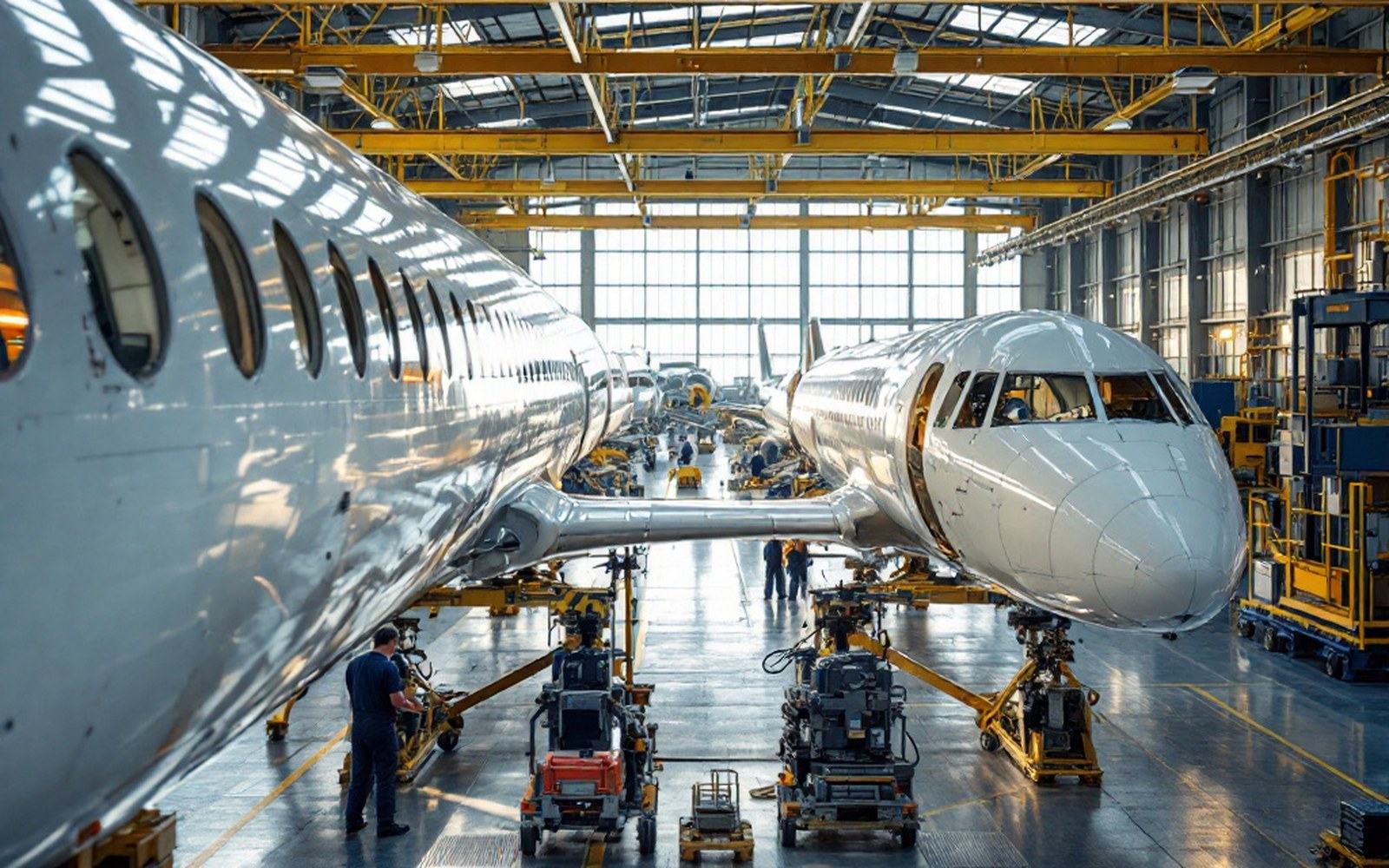
An industry, not a workshopFuselage frames in line under gantries: building to volume needed tooling before it needed designs.
A Factory Before a Design Office
Construcciones Aeronáuticas SA was founded in 1923, established by royal decree to give Spain a domestic aircraft industry at a moment when European aviation was accelerating fast enough to make dependence on imports look dangerous. The founding site was Getafe, on the southern fringe of Madrid, where flat ground and a government aerodrome were already in place. A second facility followed at Tablada, near Seville, not long after. Both locations mattered strategically — they sat beside aerodromes where the machines could be tested immediately off the production line — but the early industrial logic was straightforward: Spain needed aircraft and could not yet design them from first principles, so CASA would build what others had proven.
Licence production was the dominant mode of the first two decades. Bristol, Breguet, and Dornier were among the manufacturers whose designs CASA assembled, adapted, and gradually improved in Spanish workshops. The educational value of licensed manufacture is easy to underestimate: every rivet pattern and spar layout is an argument in metal about how loads travel through a structure, and the workers and engineers who spent years inside those drawings absorbed that argument at close range. Licence building of this kind was not a shortcut around engineering knowledge — it was, for an industry starting from a low base, the most direct route into it.
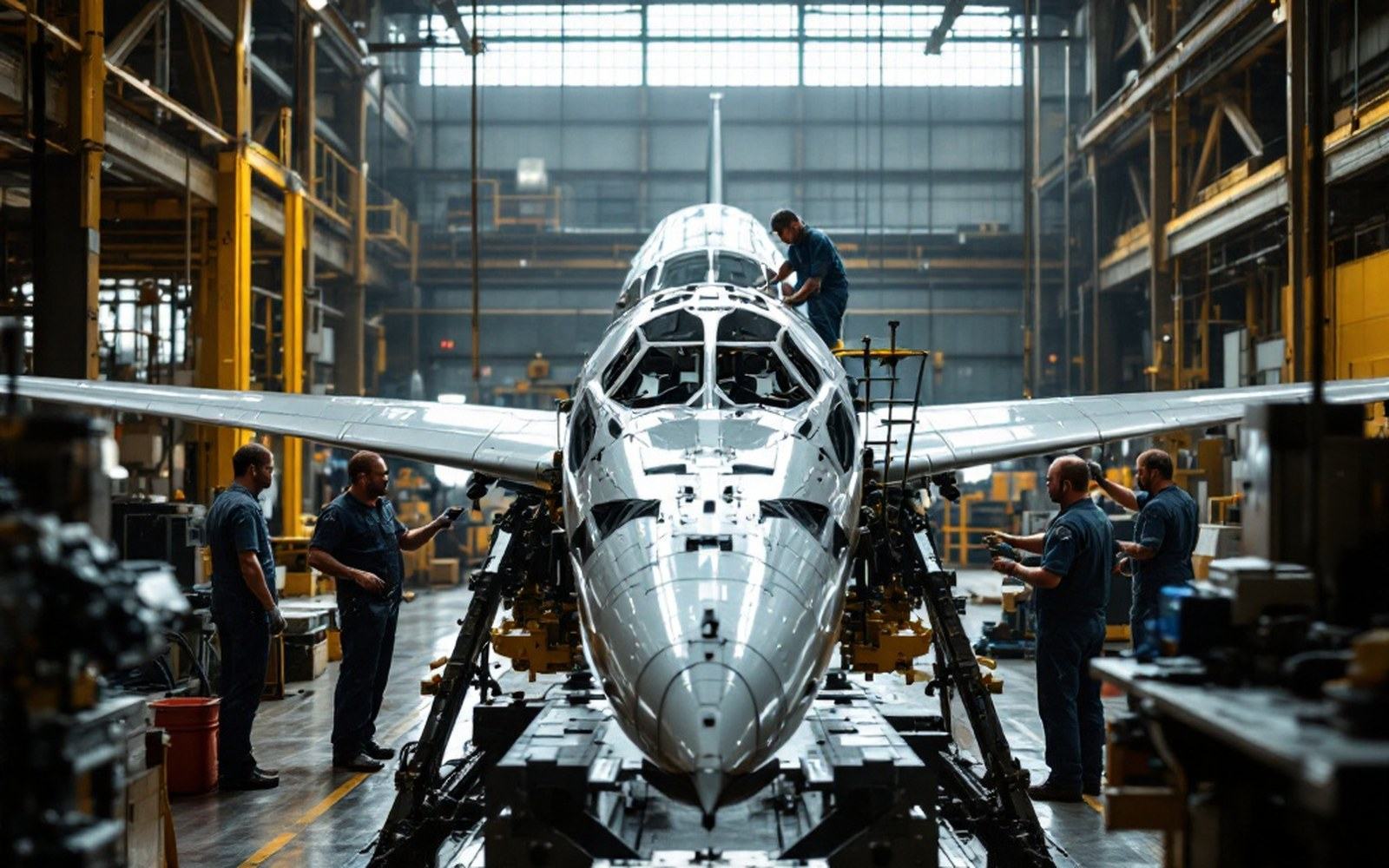
Other people’s drawingsBuilding to licence is how the jigs, the tooling and the workforce were created.
The Getafe works expanded steadily through the 1920s and 1930s, accumulating jigs, tooling, and the skilled labour that takes a generation to train. A jig — the frame that holds components in exact relation while they are assembled — is a capital investment in a specific geometry; the more jigs a factory accumulates, the deeper its commitment to precision repetition. CASA's early jig-making capability gave it a manufacturing floor that could, in principle, be turned toward original designs once the design office was ready to produce them.
The Design Office Comes of Age
The transition from licensed assembler to original manufacturer was neither sudden nor clean. Through the 1940s and 1950s CASA developed a range of transport and training aircraft that drew on the structural traditions absorbed through licensed work but were increasingly shaped by Spanish engineers working through Spanish requirements. The CASA 201 Alcotán and the CASA 207 Azor — both piston-engined transports — represent this middle period: aircraft that are recognisably of their European era but were conceived and engineered in Getafe.
The jet age sharpened the demand for original capability. CASA's response was the C-101 Aviojet, a milestone in Spanish aviation: a jet trainer developed entirely in-house and first flown in 1977. The C-101 used a turbofan engine sourced from Garrett, an American manufacturer, but the airframe — wing geometry, fuselage structure, systems integration — was Spanish work from the drawing boards at Getafe. It entered service with the Spanish air arm and was exported to Chile, Honduras, and Jordan, which meant that CASA's engineering was now being validated by foreign operators with their own requirements and standards.
More consequential commercially was the CN-235, a twin-turboprop regional transport developed jointly with the Indonesian manufacturer IPTN and first flown in 1983. Joint development of this kind tests a design office in ways that licensed production never does: when two national teams are each responsible for defined portions of the aircraft, every interface is negotiated and every tolerance matters at the boundary between organisations. The CN-235 worked. It entered production in both countries and became one of the more widely operated light transports of its generation, with roughly forty operators across about thirty countries ↗ including military, coastguard, and civil users. That breadth of operator is the real measure of an aircraft that was engineered to be maintained and modified under varied conditions.
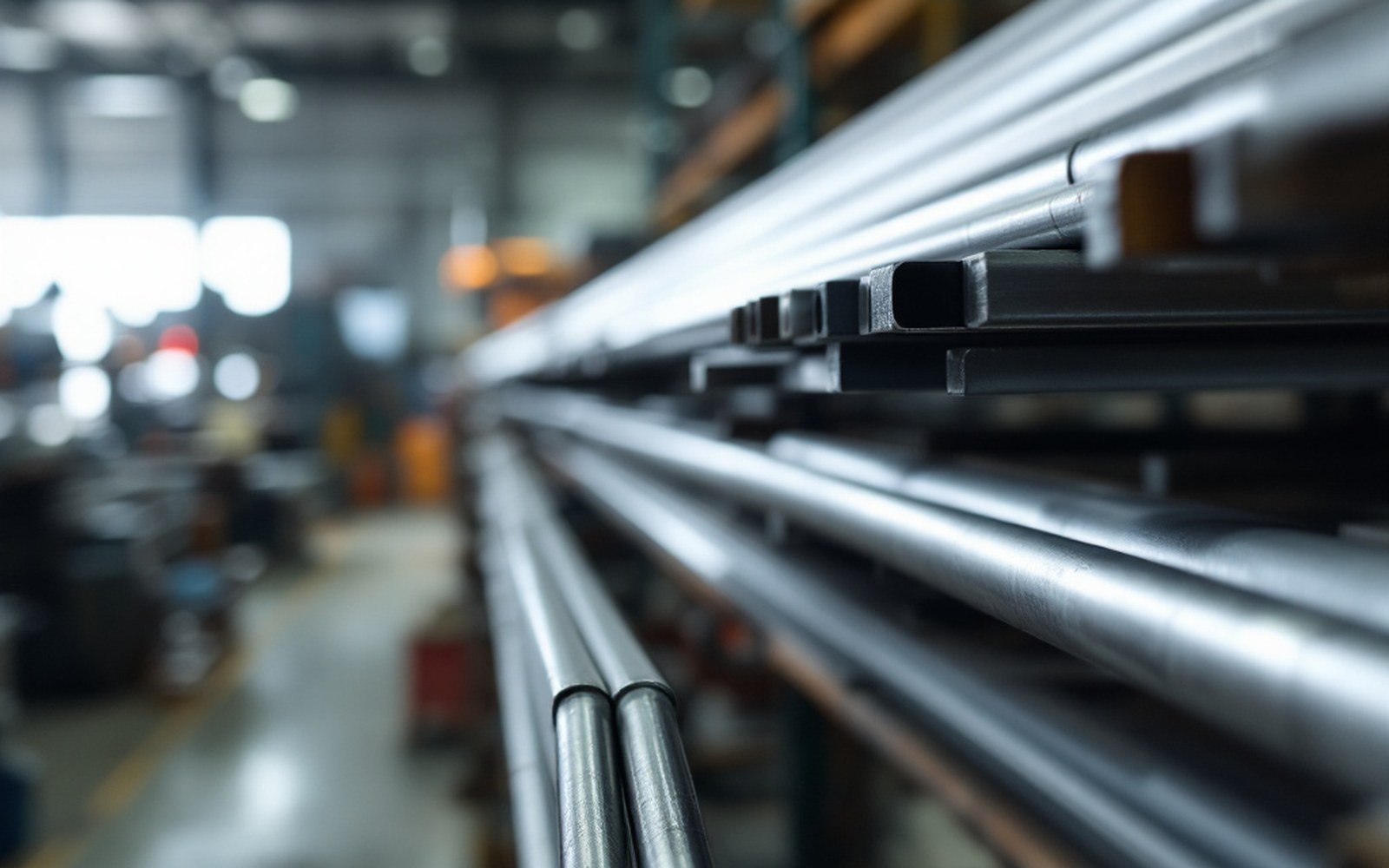
Tube, sheet and stockEach material brought its own tooling and its own repair practice into the shop.
The C-212 Aviocar, which preceded the CN-235 and first flew in 1971, told a related story. A short-takeoff-and-landing utility transport with a high wing and a rear ramp, the C-212 was designed around the operating conditions of undeveloped airstrips — rough surfaces, short runs, limited ground support — and it accumulated operators precisely because those conditions are common in the parts of the world where infrastructure is sparse. CASA's Getafe engineers had, by the early 1970s, learned to design not just for performance figures but for the full life of the aircraft in the field.
Consolidation and Legacy
CASA did not remain a standalone national manufacturer indefinitely. European aerospace consolidation accelerated through the 1990s, and in 1999 CASA agreed to merge with the German company DASA and the French company Aérospatiale Matra, a merger completed in 2000 that created the European Aeronautic Defence and Space Company, known as EADS. The Getafe facility continued to operate within this larger structure, and the CASA name persisted for a period in product designations before being absorbed into what is now Airbus Defence and Space ↗, which maintains a significant presence at Getafe to this day. The CN-235 and C-295 — the latter a stretched, more powerful successor to the CN-235 — are still in production at the company's Seville plant, which means the enterprise established to build licensed aircraft in 1923 is still manufacturing original Spanish-lineage designs a century later.
The Instituto Nacional de Técnica Aeroespacial, the Spanish state aeronautical research body known as INTA, developed alongside CASA through much of the twentieth century, providing the wind-tunnel testing and materials research that any original design programme requires. The relationship between a manufacturer's drawing office and a state research institute is one of the structural features that distinguishes an industry from a collection of workshops: CASA and INTA, operating from adjacent positions in the Spanish aeronautical world, gave each other the feedback loops that serious engineering depends on.
What the Museo del Aire at Cuatro Vientos holds of CASA's production — including airframes from the C-101 and earlier types — is the physical record of that century of accumulation. The machines themselves show the trajectory: the early licensed work is legible in the structural conventions borrowed from European contemporaries; the later original aircraft carry a house style that is distinctly Getafe, where long familiarity with specific manufacturing conditions shaped what the engineers thought was possible and what they thought was worth attempting.

A works aerodromeA factory field is a different kind of place: the aircraft are built where they are flown.