Manufacture/Materials and jigs
Materials and jigs
Tube, fabric, plywood and later alloy, each with its own tooling and its own repair practice.
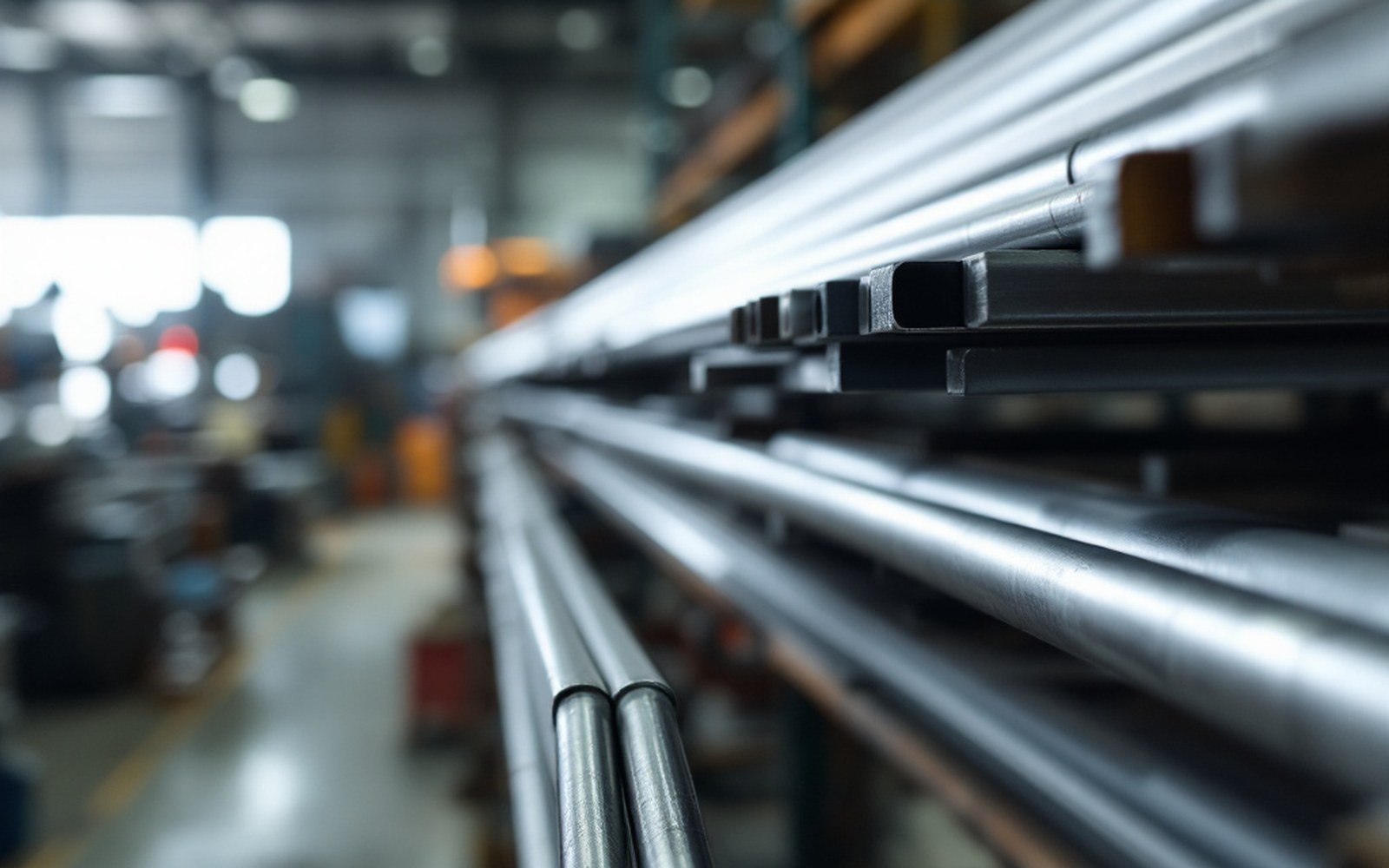
Tube, sheet and stockEach material brought its own tooling and its own repair practice into the shop.
From workshop bench to flying machine
The earliest autogiro rotors were built from the same stock as contemporary aircraft: steel tube for the spar, spruce for the ribs, and fabric stretched over the whole assembly and doped tight. Each blade was a long, narrow structure that had to be geometrically identical to its partners — any imbalance would shake the machine apart — so the jig, a fixed timber frame against which every component was assembled, was not a convenience but a prerequisite. At Cuatro Vientos in the early 1920s, where Juan de la Cierva ↗'s first successful machines were built and flown, the tolerances available were those of a careful hand-tool workshop, which made the jig's precision the only reliable check.

Work in progressAn airframe opened up on trestles. Rotor components are small enough to hold in two hands, which is why so many survive.
Plywood entered the structure wherever a formed surface was needed without excessive weight — particularly at the blade root, where the loads from the flapping hinge concentrate. The material is forgiving to shape, stiff in its own plane and repairable in the field with ordinary woodworking tools, which mattered when aerodromes were remote and spares were scarce.
The shift to aluminium alloy came progressively through the 1930s, driven by fatigue rather than simple strength. A rotating blade flexes at every revolution; wood and fabric tolerate that cycling well until they do not, at which point failure is sudden. Alloy construction, properly riveted with drawn sheet over pressed formers, offered a more predictable fatigue life, though it required new jig designs — tighter, metal-faced, and considerably more expensive to build. CASA, as it industrialised rotorcraft and fixed-wing production at Getafe ↗, developed jig-making as a discipline in its own right, holding blade profiles to tolerances that a timber frame simply could not sustain.
Fabric remained on control surfaces and blade coverings long after metal had taken the primary structure, because doped cotton or linen adds almost no weight while closing a surface aerodynamically. Repair practice followed the material: a fabric patch, properly doped and smoothed, was a field repair; a cracked alloy former was not.
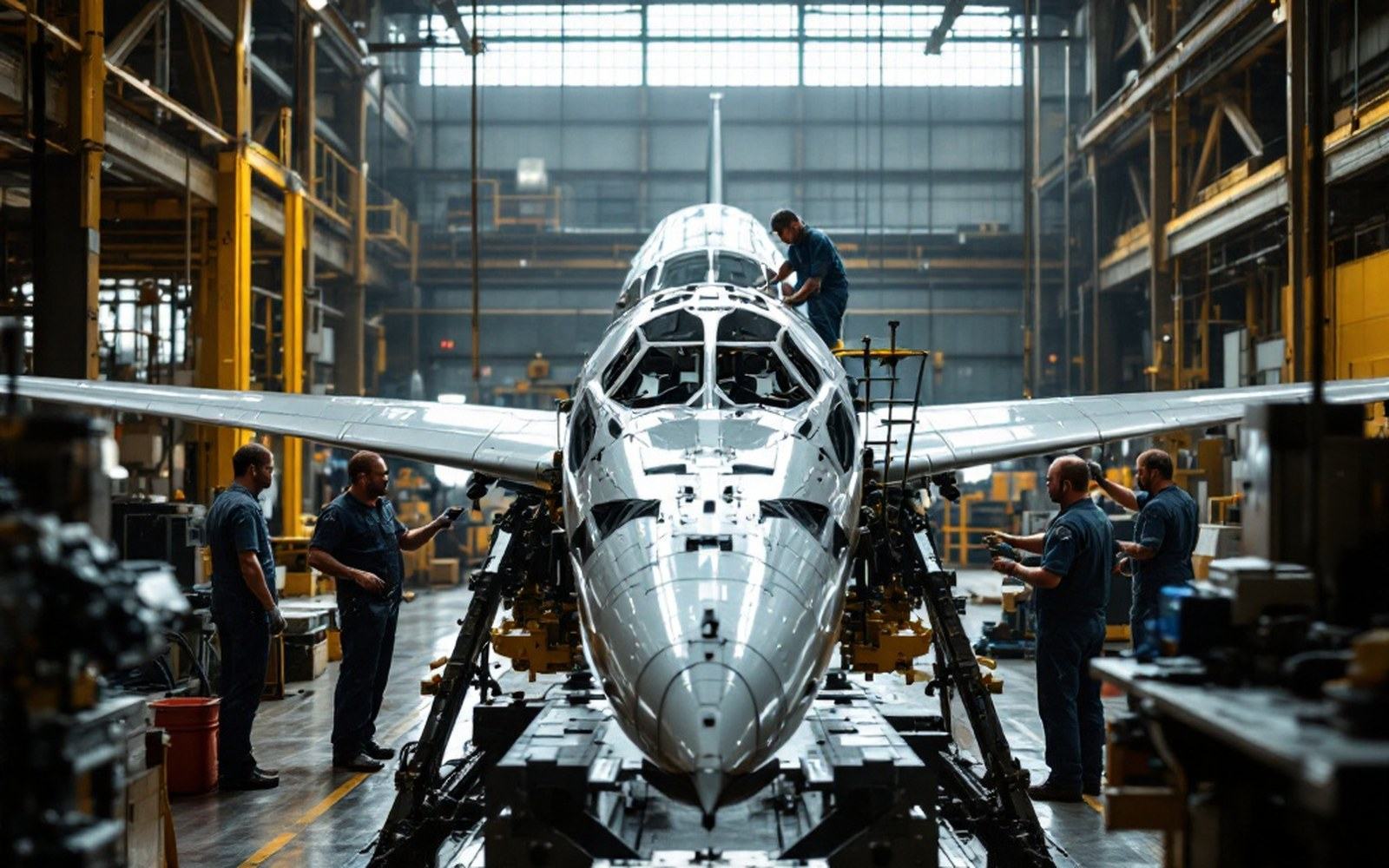
Other people’s drawingsBuilding to licence is how the jigs, the tooling and the workforce were created.