The Collection/Museo del Aire
Museo del Aire
The national collection sits at Cuatro Vientos, where rotorcraft history was made — and keeps most of the machines that made it.
What the Collection Is
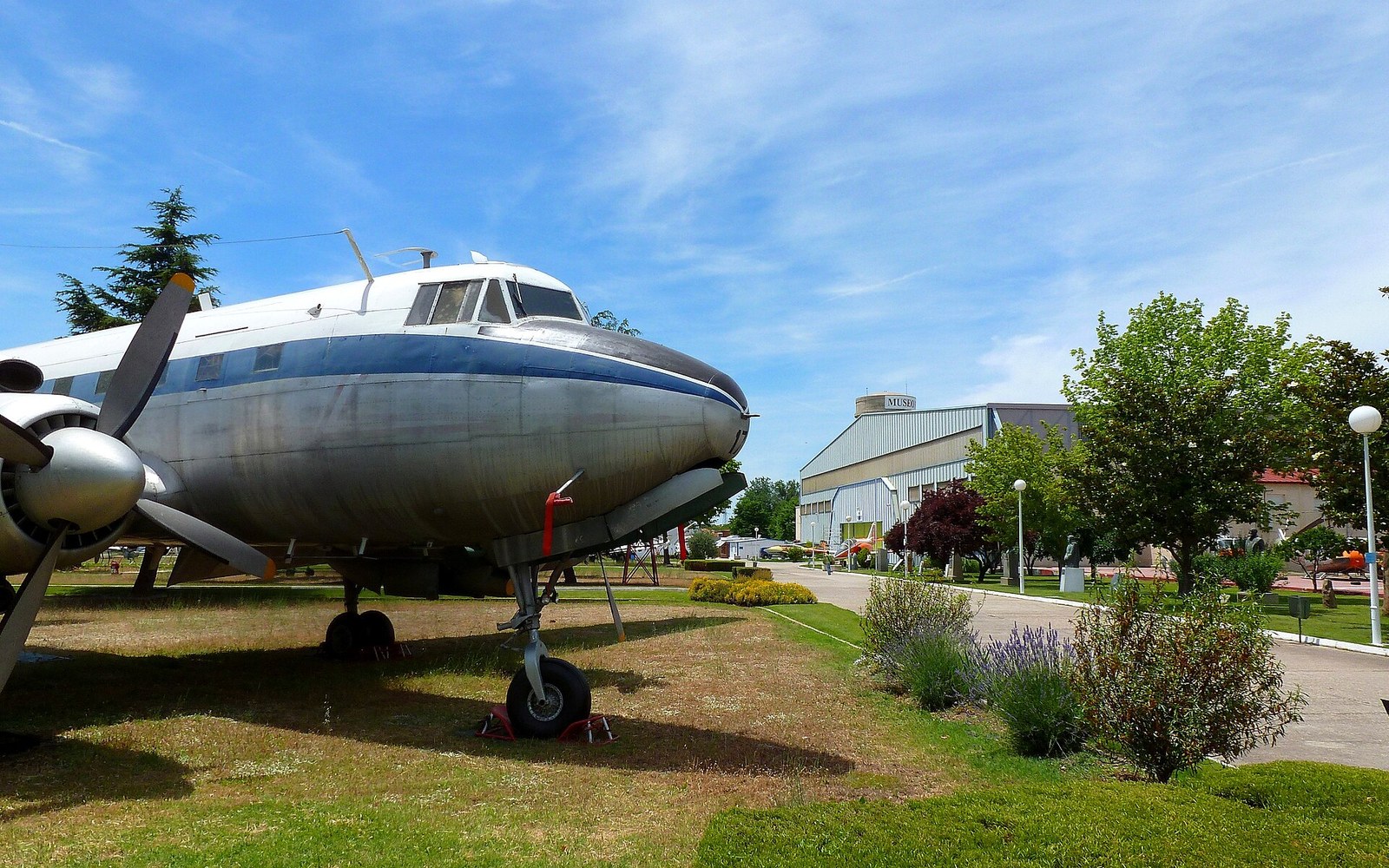
Aeronautical collections are peculiar institutions. They preserve objects that were built to be expendable — test airframes, prototypes, service machines whose operational life ended — and they do it in buildings that were themselves once part of the working aerodrome. The Museo del Aire at Cuatro Vientos, on the south-western edge of Madrid, is precisely this kind of place. The hangars are original. The apron is original. Several of the aircraft on display were built not far from where they now stand.
The museum holds the formal national collection of Spanish aeronautical heritage, managed under the auspices of the Spanish Air and Space Force. Its scope runs from early twentieth-century powered flight through the jet age, but the machines that make it essential reading for anyone interested in rotorcraft engineering are the survivors of Juan de la Cierva's design programme and the hardware that grew directly from it. Nowhere else in the world concentrates as much of that lineage in one place.
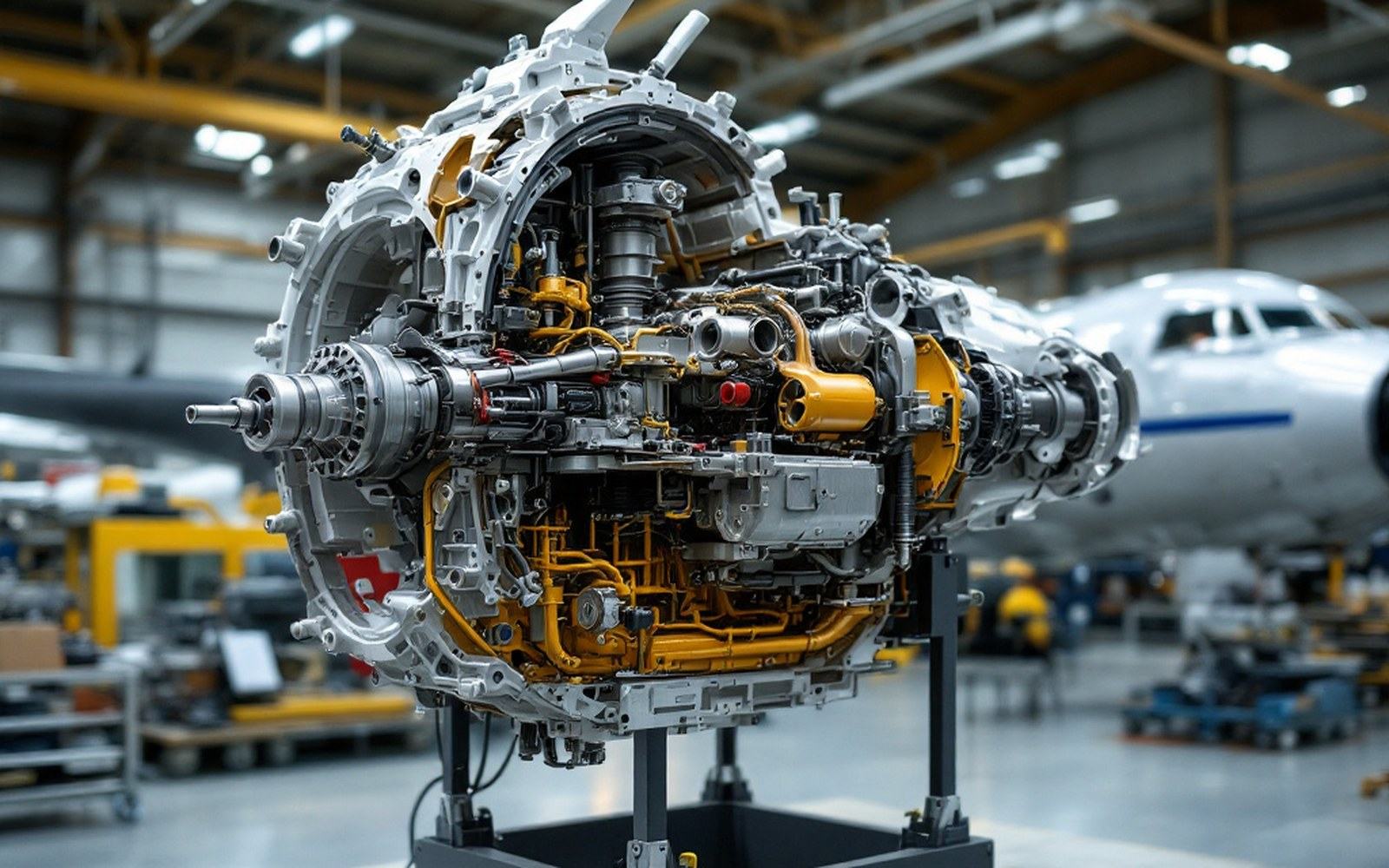
Sectioned to be understoodA cut-away assembly explains in one look what a page of description struggles with.
The site at Cuatro Vientos was the location of the first successful autorotating flight in January 1923, when Cierva's C.4 lifted clear of the ground under rotor lift alone and flew a closed circuit of roughly four minutes. That event is the hinge on which the whole subsequent history of rotorcraft turns, and the aerodrome has not forgotten it. The physical relationship between the place where the machine flew and the place where surviving examples are kept is not incidental — it is the logic of the institution.
What the Machines Show
An engineering collection is only partly about the objects as objects. What matters is what a close inspection of the hardware reveals about the problem that was being solved at the moment of construction. The autogiro machines in the Museo del Aire reward that kind of looking.
The rotor head is where everything interesting happens, and the collection's holdings make it possible to trace how each mechanical problem was identified and addressed across successive generations of design. The dissymmetry of lift — the unequal load imposed on the advancing and retreating blades as the machine moves forward — is visible in the geometry of the flapping hinge, which allows each blade to rise and fall independently through its cycle, equalising lift across the disc. Early Cierva machines carried this hinge as a relatively crude pivot; later assemblies added the drag hinge as well, permitting the blade to move fore and aft in its plane of rotation and relieving the structural loading at the root. Both features can be seen in section on the museum's rotor-head displays, where the joints and bearings are accessible in a way that a flying machine, by definition, cannot afford.
The progression from purely free-spinning rotors — which had no pitch control and depended on the pilot working conventional surfaces to steer — through to direct-control heads, where the whole rotor tilts to provide lateral and longitudinal command, is documented by machines at different stages of the development arc. Direct control removed the fixed wing entirely on some variants and concentrated all the controllability in the rotor disc itself. The hardware shows this not as an abstract transition but as a concrete rearrangement of mass and pivots, readable in the physical differences between one rotor head and the next.
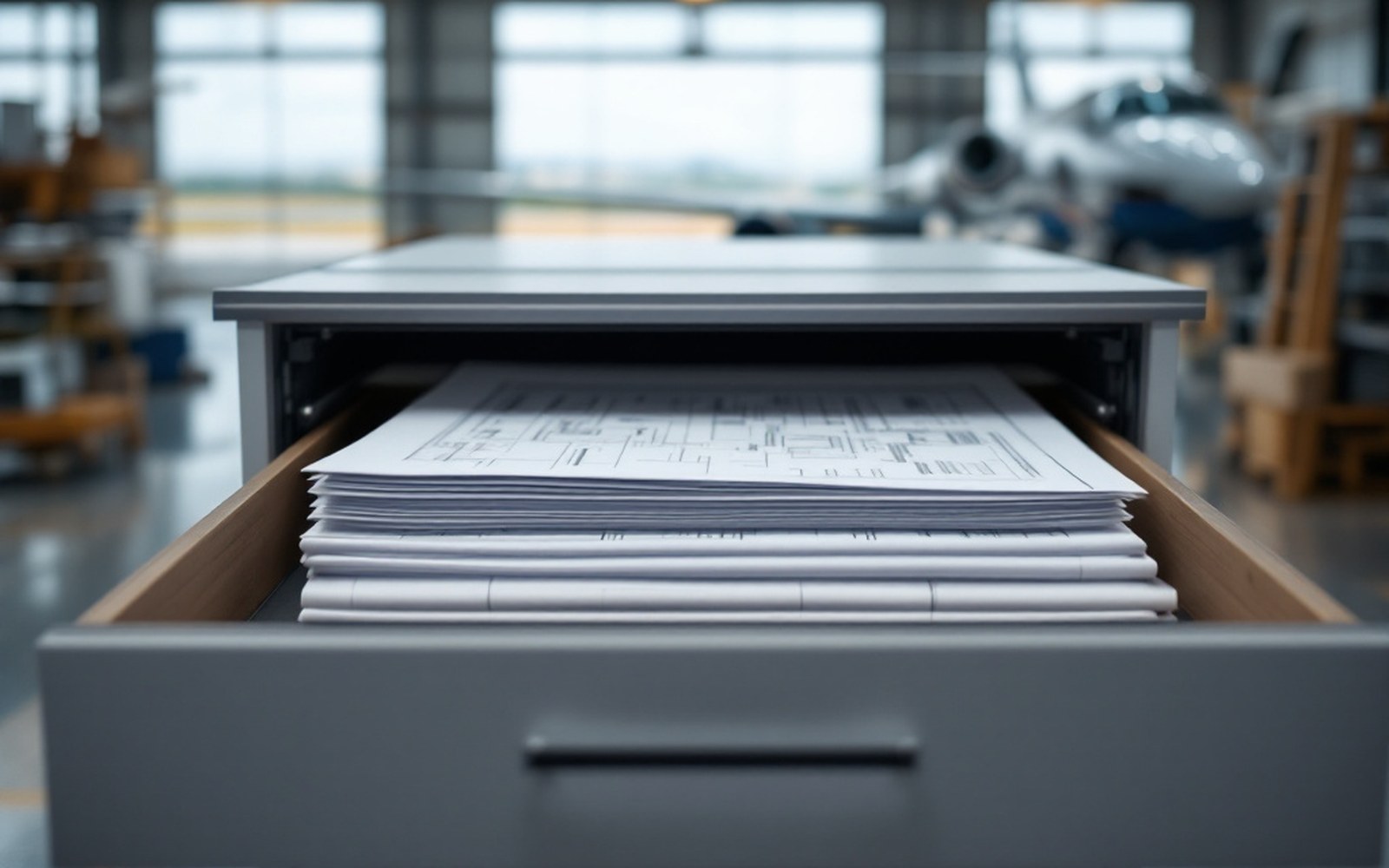
The other half of the collectionFlat drawers of large drawings: the reasoning behind the hardware is on paper.
CASA, the Construcciones Aeronáuticas SA that built under Cierva licence and later developed Spanish aviation into a serious manufacturing industry, has examples in the collection as well. The relationship between the design office and the factory floor is compressed here into adjacent exhibit spaces: the drawing and the object it describes, separated by a short walk. For anyone working through how autorotation was engineered into a safe and repeatable mode of flight rather than simply observed as a lucky phenomenon, the collection provides evidence that cannot be replicated by reading alone.
The Archive Behind the Objects
The machines themselves are only the most visible part of what Cuatro Vientos holds. The documentary record — drawings, test reports, correspondence, photographs — constitutes an equally important archive, and it is the layer of the collection that specialists most often come to consult. Rotor work is, as any engineer in the field will confirm, geometry before it is anything else. The drawings are where the argument was made: where the blade chord was set, where the hinge offset was calculated, where the blade twist was resolved against the expected autorotation envelope. Without those documents, the object in the hangar is a beautiful thing but a partial one.
The Instituto Nacional de Técnica Aeroespacial ↗, which has occupied adjacent facilities and maintained a close institutional relationship with the collection over many decades, has been one route through which technical documentation has been preserved and made accessible to researchers. The Royal Aeronautical Society ↗, which holds the Cierva papers in London, provides the other major primary source, and the two archives are properly complementary: one holds the British end of a collaboration that was always international in practical terms, the other holds the Spanish manufacturing and test record.
Condition varies across the collection, as it does at every institution of this kind. Some machines have been restored to display standard; others show their age and their service history honestly, which is in some respects more informative. A rotor blade that has been through genuine flight loads carries evidence of those loads in its structure, and evidence of that kind has a value that a polished replica cannot replicate.
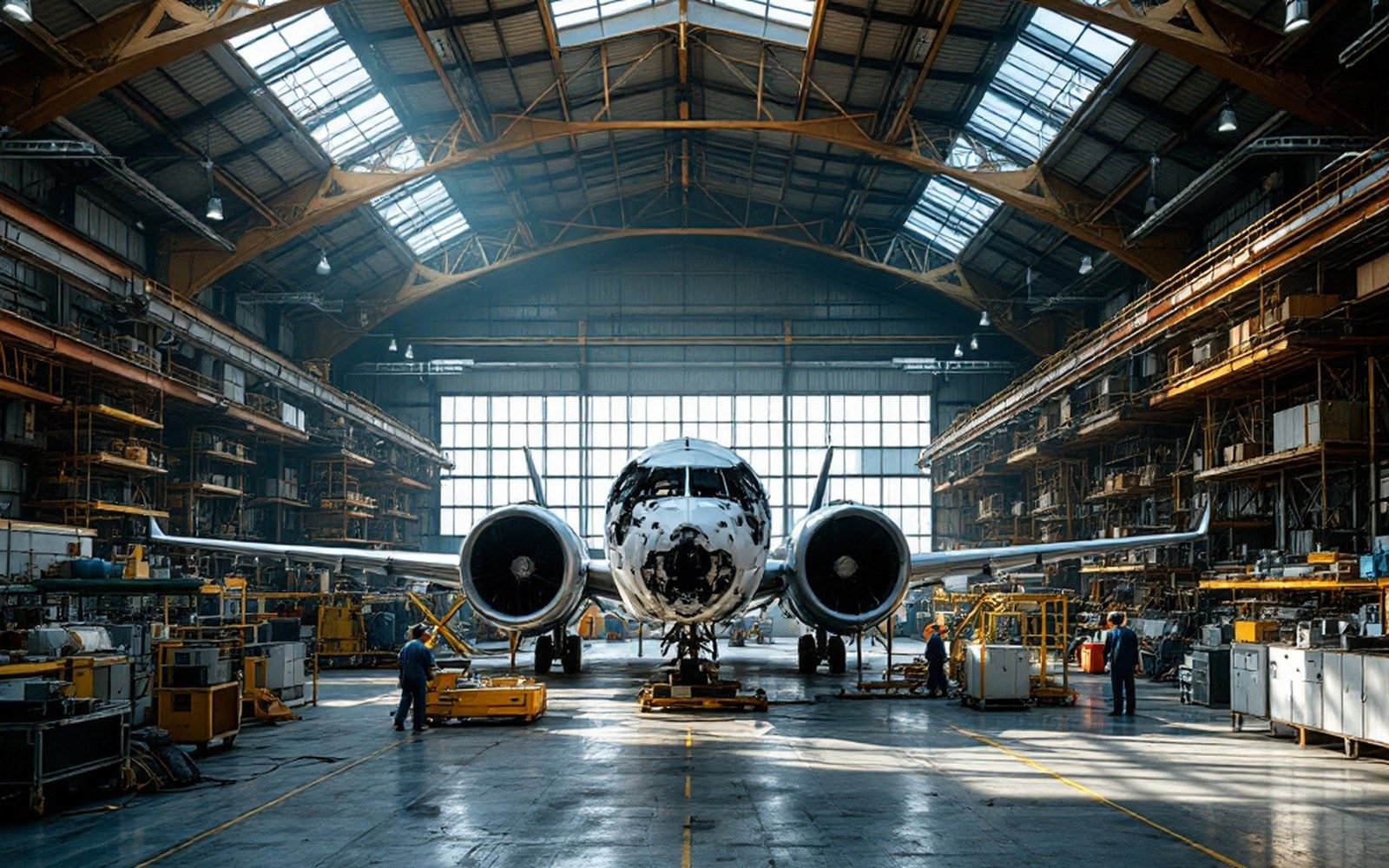
Work in progressAn airframe opened up on trestles. Rotor components are small enough to hold in two hands, which is why so many survive.
The collection is not static. Machines move; condition assessments change what is accessible; research requests open parts of the archive that are not routinely on display. Anyone coming specifically to examine rotor hardware or technical documents should contact the museum in advance and come prepared to look carefully. The reward for that preparation is access to the most concentrated physical record of how the autogiro's engineering problems were actually worked out — not described in retrospect, but built, flown and kept.