Aerodromes/Getafe, Madrid
Getafe, Madrid
Where the factory meets the runway: a works aerodrome is part of the production line, not an alternative to it.

A works aerodromeA factory field is a different kind of place: the aircraft are built where they are flown.
The logic of a works aerodrome
A flying field exists to let aircraft fly. A works aerodrome exists to let aircraft be made — and flying from it is the final stage of manufacture, not the purpose of the place. Getafe, on the southern fringe of Madrid's metropolitan spread, has been that second kind of site for over a century, and its character has never really changed even as the machines built there transformed out of recognition.
The town sits roughly fifteen kilometres south of the capital, on the flat, arid Castilian meseta where the ground is level enough and the air dry enough that early aeronautical engineers found it immediately useful. The first military aviation facilities at Getafe date to the nineteen-tens, making it one of the oldest continuously used aeronautical sites in Spain. What grew there, however, was not primarily an aerodrome in the sporting or transport sense; it was an industrial compound that happened to need a runway to prove its output.
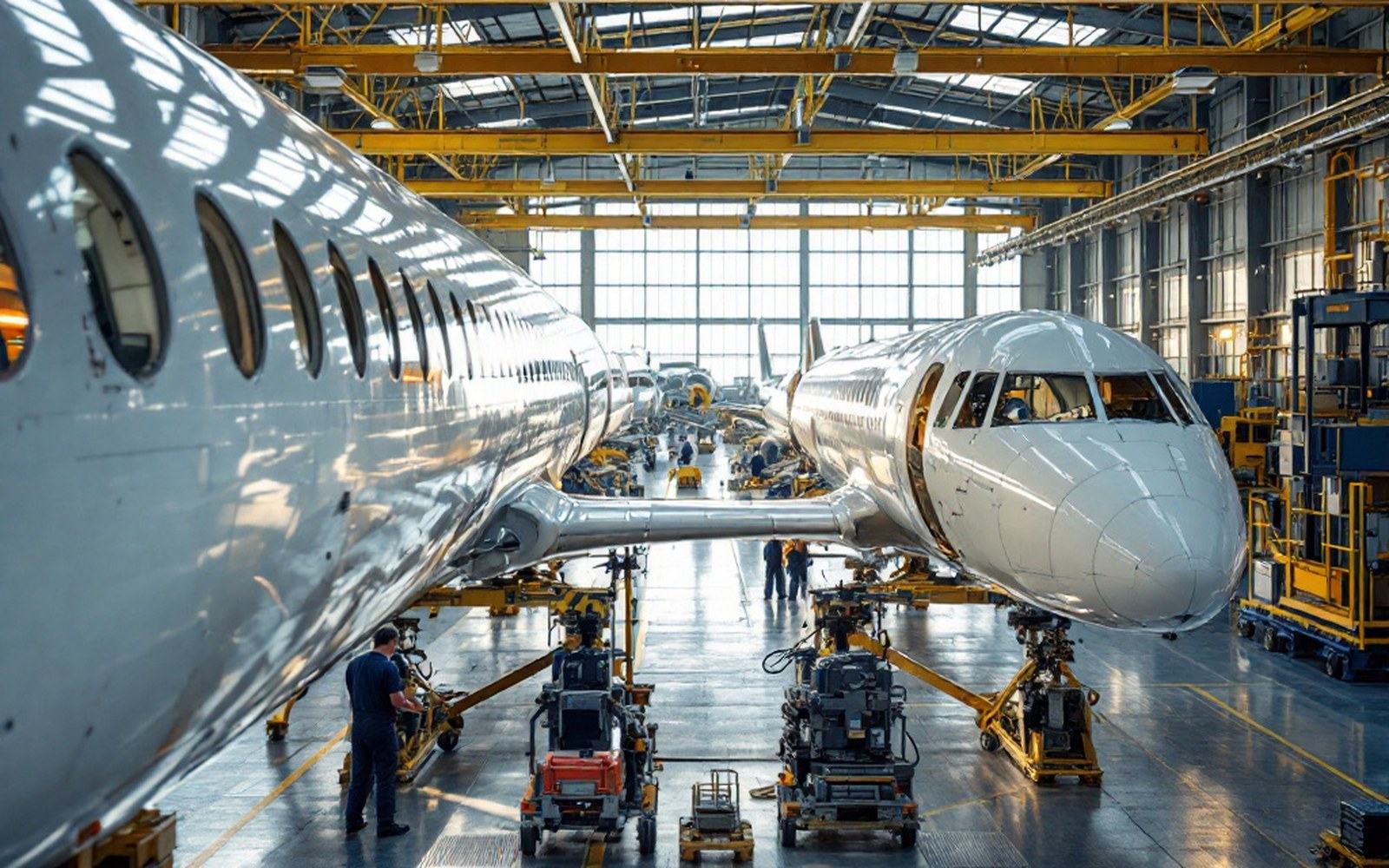
An industry, not a workshopFuselage frames in line under gantries: building to volume needed tooling before it needed designs.
Factory, flight line, flight test
CASA — Construcciones Aeronáuticas SA, the company that became the backbone of Spanish airframe manufacturing — established production at Getafe in the 1920s, and the relationship between the factory floor and the adjacent strip defined how the aerodrome functioned. Aircraft were assembled in the hangars, rolled out onto the apron, and then put through acceptance flights before delivery. The runway was, in effect, the last workstation.
That logic shaped the physical site. The buildings faced inward toward the production sequence rather than outward toward the public. Ground services were organised around tooling, jigs, and parts stores rather than passenger handling. The aerodrome perimeter enclosed what was functionally a closed manufacturing campus, and access was controlled accordingly. This is not a circumstantial detail: it determined who worked there, what expertise gathered there, and what kind of engineering culture the place produced.
It was that culture which made Getafe a place where rotor problems were taken seriously as engineering problems. Juan de la Cierva worked through the successive failures of his early rotor designs in the early 1920s, and the proximity of a functioning aeronautical manufacturing base — with its draughtsmen, its workshop capacity, and its test strip — was not incidental to the pace at which solutions were found. The flapping hinge, the intervention that resolved the dissymmetry of lift threatening every early rotor design, was not invented in a laboratory; it was worked out in the context of a place where the next prototype could actually be built and flown.
CASA remained the dominant presence at Getafe through the mid-twentieth century and beyond, eventually becoming part of the European aerospace consolidation that produced Airbus Defence and Space ↗, which continues to operate on the site today. The Instituto Nacional de Técnica Aeroespacial — INTA, the Spanish state aeronautical research body — also established itself in proximity to Getafe, giving the area a density of aeronautical expertise unusual outside the largest European aerospace centres. INTA's formal research mandate ↗ covers flight testing, materials evaluation, and systems certification, all of which depended on having an adjacent strip where experimental work could be flown the same day it was configured on the ground.
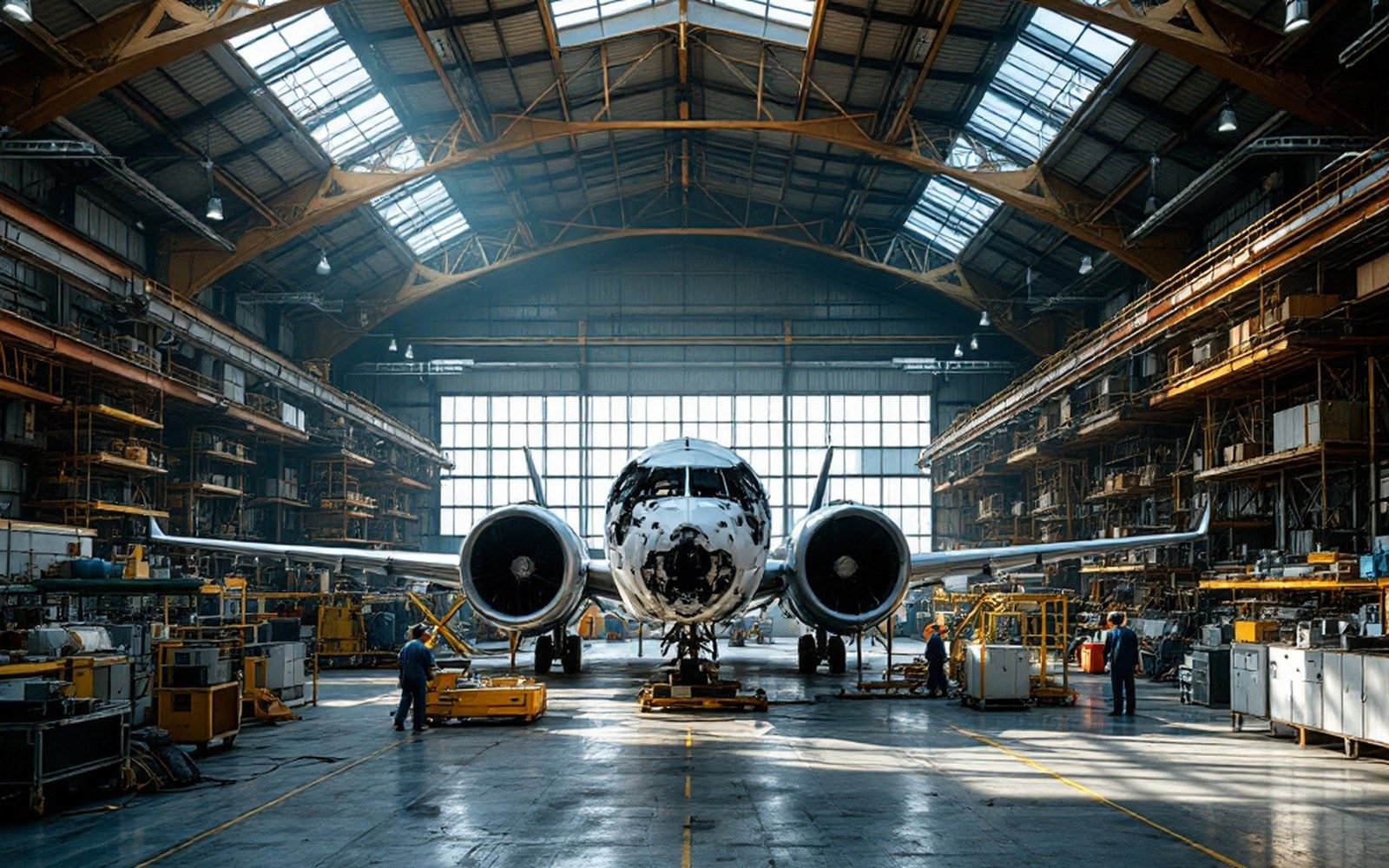
Work in progressAn airframe opened up on trestles. Rotor components are small enough to hold in two hands, which is why so many survive.
What the site holds now
The aerodrome continues to support flight test and delivery operations for Airbus Defence and Space programmes, including military transport aircraft assembled in the adjacent factory buildings. The profile of the place — large, security-bounded, oriented entirely toward production and test rather than general aviation — has changed in scale but not in kind since the 1920s. The runway is there because the factory is there; the factory would not function without the runway.
For anyone tracing the history of Spanish aeronautical engineering, Getafe is not primarily a place to visit in the way that a preserved airfield or a national collection might be. It is a place to understand: a site where the pressure to get the next machine into the air on schedule forced engineering decisions that could not have been reached any other way. Works aerodromes produce a specific kind of knowledge, and Getafe has been producing it longer than almost anywhere else in Spain.