Aerodromes/Sabadell, Barcelona
Sabadell, Barcelona
A working general-aviation field where light aircraft and rotorcraft share the pattern with the schools that never stopped.
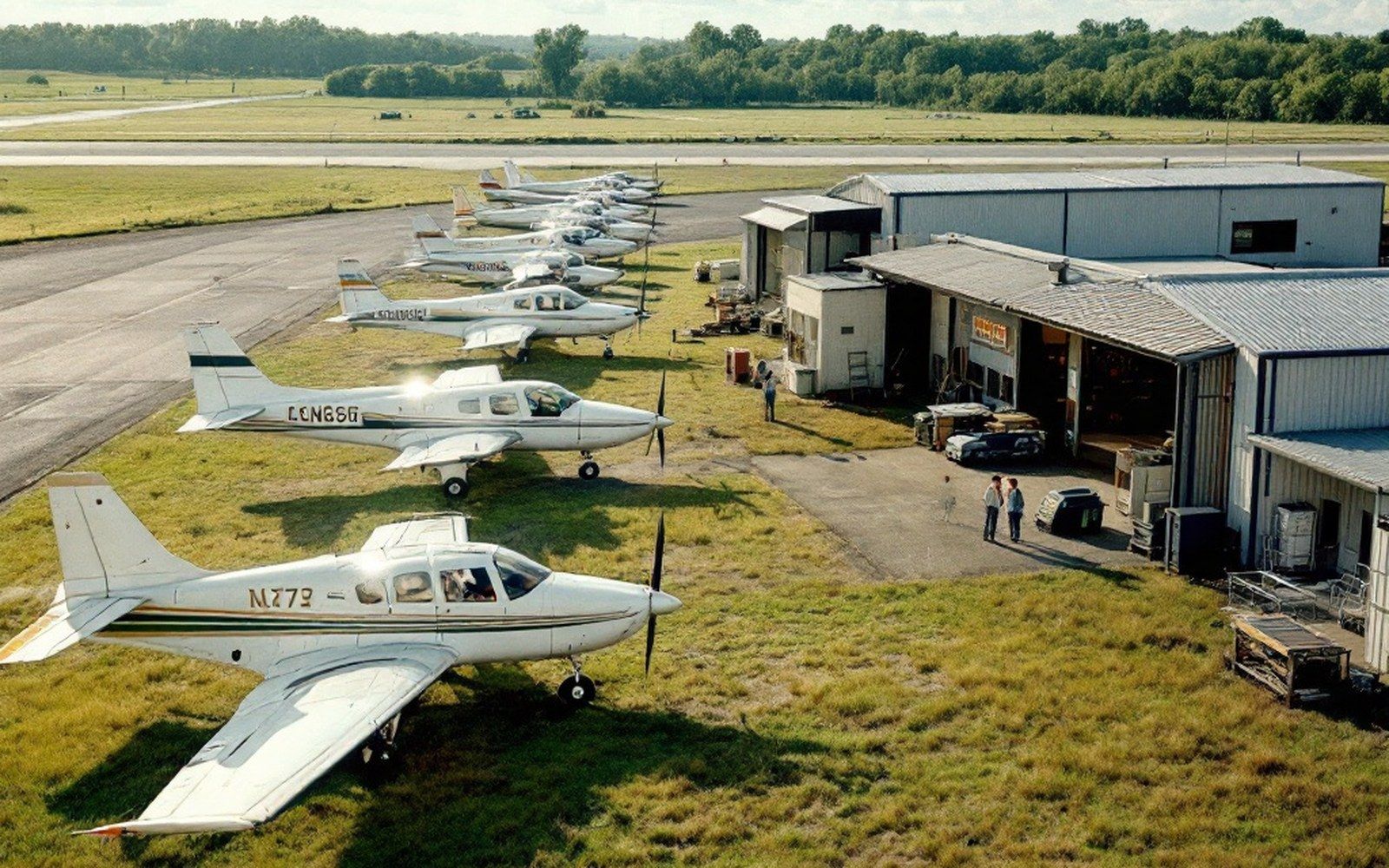
The living collectionLight aircraft on grass and the schools that maintain them: rotor training still happens here.
The Field That Kept Flying
Sabadell Airport sits a few kilometres north of the city of Sabadell in the Vallès Occidental comarca, close enough to Barcelona to benefit from its engineering culture, far enough to keep a quieter circuit of its own. It opened in 1931, and the continuity is real: unlike several Spanish fields that closed, were absorbed or militarised beyond recognition, Sabadell kept a coherent civil operation across the decades.
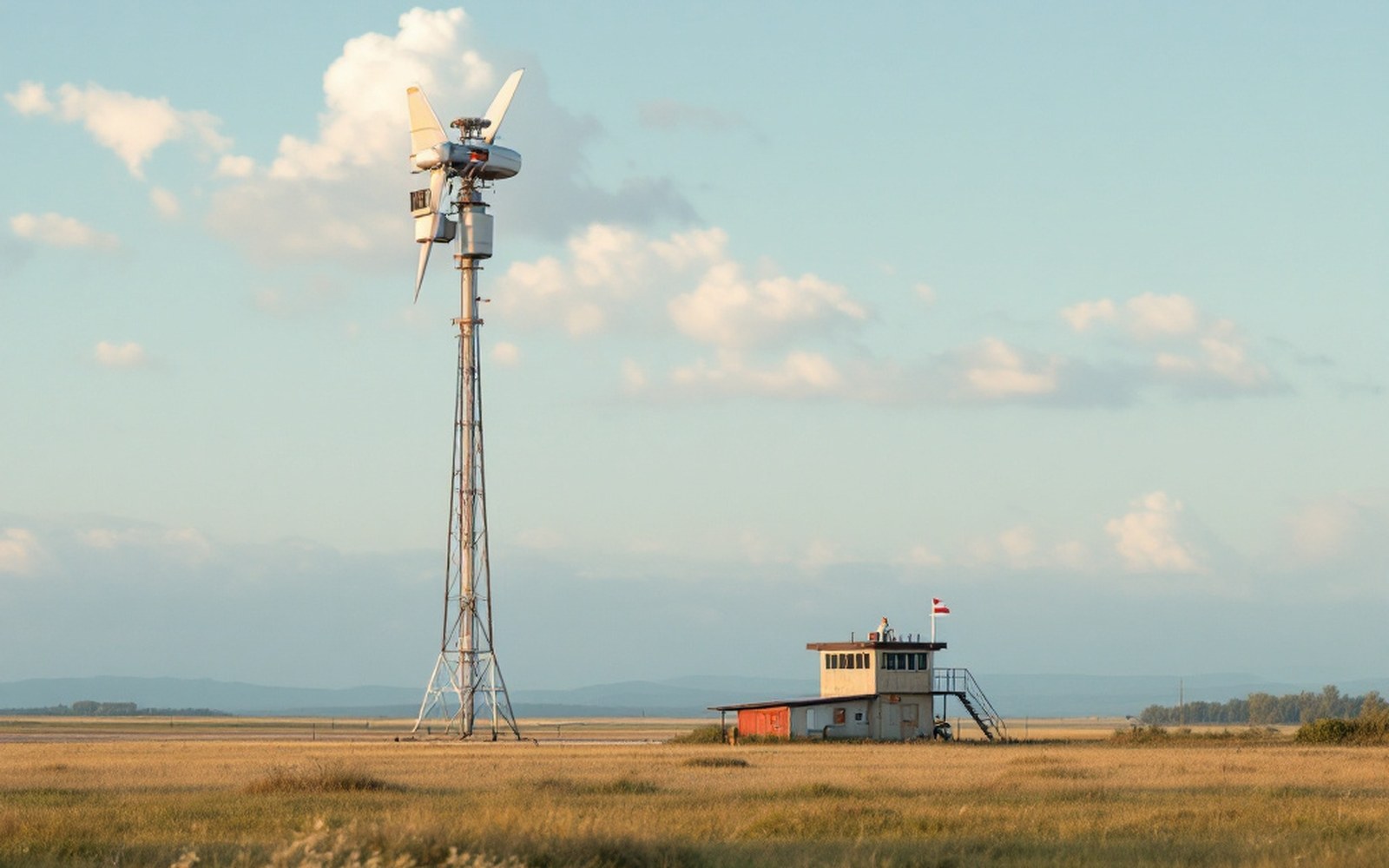
A field, not an airportA windsock and a low control building are most of the equipment an early aerodrome needed.
The infrastructure is modest and deliberately so. A single paved runway — orientated roughly northwest–southeast to suit the prevailing Vallès winds — handles a mix of light piston aircraft, training aircraft and light rotorcraft ↗ that would be displaced immediately if the field tried to compete with El Prat. It does not try. What Sabadell offers is a stable traffic pattern, reasonable ground services, and a concentration of flying schools and maintenance outfits that require exactly that kind of airspace.
That concentration matters for anyone interested in how aeronautical skills are actually transmitted. The schools at Sabadell train pilots on light singles, and their maintenance hangars produce the kind of routine work — annual inspections, rigging checks, control-cable replacement — that keeps small aircraft flying and keeps engineers' hands in. The vocabulary of tube-and-fabric construction, even as the fleet shifts toward composite airframes, survives in the workshops here longer than at purely commercial fields.
Rotorcraft appear in the pattern regularly. Helicopters and autogyros — descendants in engineering logic, if not in lineage, of the rotor problems first worked through at Cuatro Vientos — use Sabadell because its relatively uncongested circuit and accommodating tower allow the deliberate, repeated practice that rotor training demands. A student learning autorotation entries needs room to be wrong and try again; Sabadell's traffic density and tolerant ATC culture provide it.
The field appears in Spain's aeronautical register maintained by ENAIRE ↗ as LELL, and the published plate data gives an honest picture of what it is: a field with straightforward instrument approaches, no scheduled services, and a circuit alive with training flights from first light to dusk. The Museu de l'Aire has no site at Sabadell, but the living collection — the machines still flying, still being maintained — is here rather than behind glass.
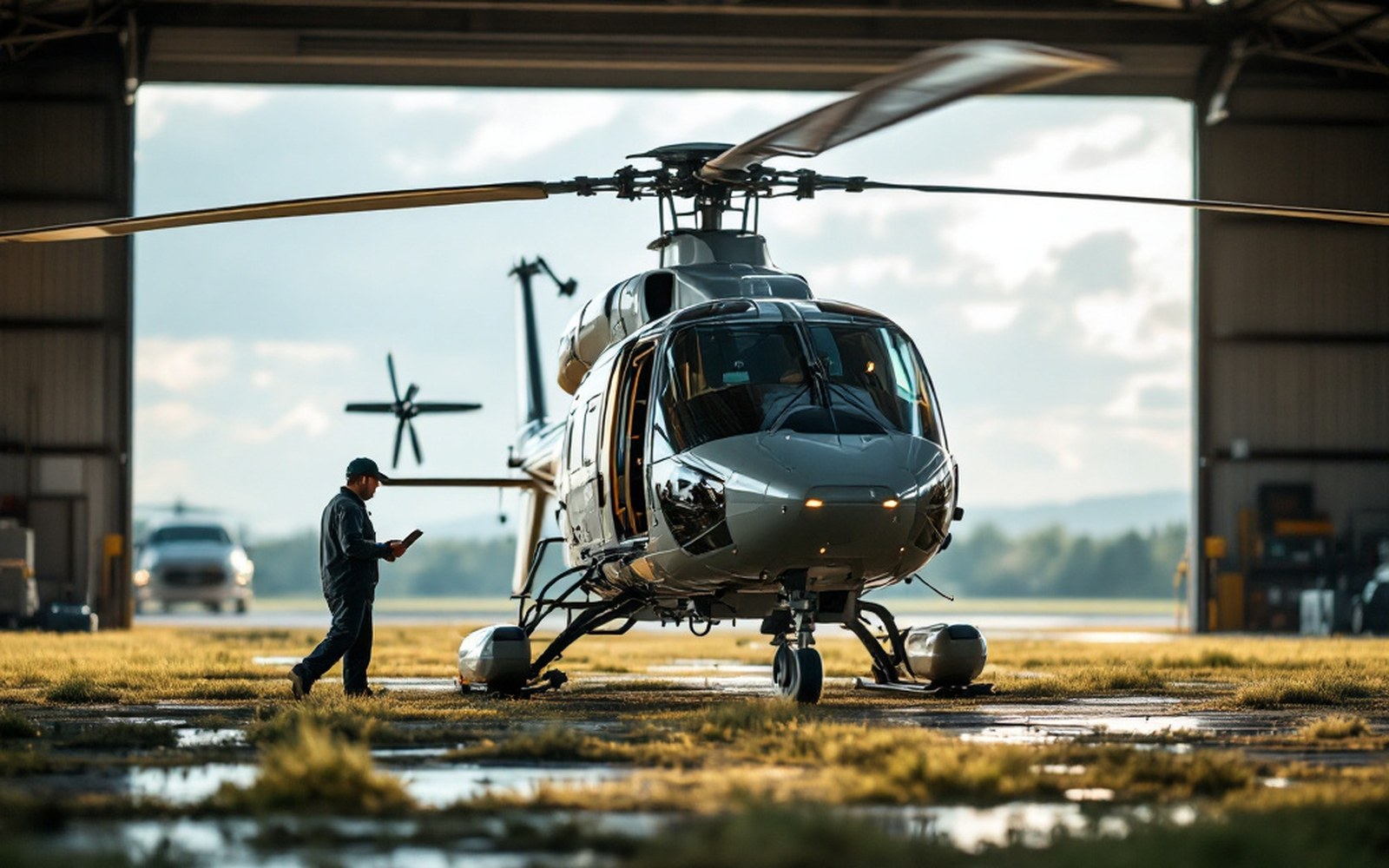
Turning on the airflow aloneWith no drive to the rotor, descent through the air is what keeps the disc spinning.