Aerodromes/Cuatro Vientos, Madrid
Cuatro Vientos, Madrid
The field southwest of the capital that watched the rotor problem get solved, one flight at a time.

Still in useLow hangars and a wide apron on the southern edge of Madrid, where the first practicable rotorcraft flew.
A Ground That Earned Its Place
Cuatro Vientos sits roughly eight kilometres southwest of central Madrid, on a plateau that offered early aviation something it needed more than comfort: flat, open ground with consistent air. The Spanish military established the aerodrome in 1911, making it one of the earliest purpose-built flying fields in the country, and for the next two decades it served as the practical laboratory for almost everything that Spanish aeronautics attempted. Engineers flew here, crashed here, redesigned and flew again. The ground absorbed a great deal of failure on its way to producing something lasting.
The name — "four winds" — is a compression of the local topography rather than poetry. The plateau genuinely draws airflow from multiple directions, which made it difficult in ways the early experimenters learned to manage and eventually, in at least one critical case, turned to advantage. A rotor that autorotates depends on there being airflow through the disc; a site with steady surface wind, however variable its heading, gives a test pilot something to work with, since there is usually enough airflow through the disc to start the rotor turning.
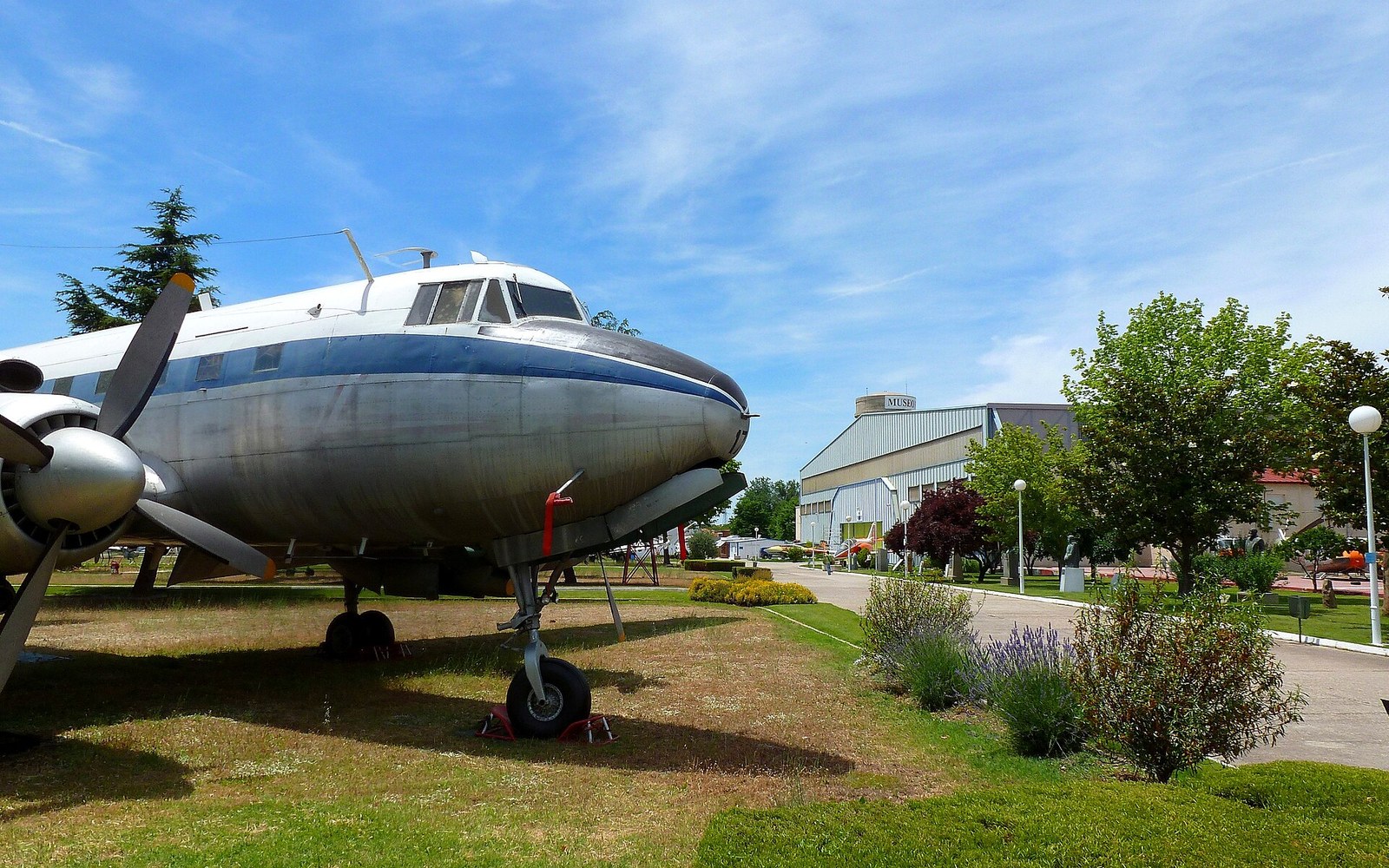
What most distinguishes Cuatro Vientos in the history of rotorcraft is that Juan de la Cierva chose it for his most important early trials. His first successful autogiro flights, with the C.4 in January 1923, took place here. The machine lifted, flew a controlled circuit and landed — the first time a rotary-wing aircraft had managed that sequence without power failure, structural collapse or loss of control. Cierva had already worked through several failed designs; the C.4 succeeded because it incorporated the flapping hinge, a pivot at the root of each rotor blade that let the blade rise and fall freely in the plane perpendicular to the disc. That single mechanical concession dissolved the dissymmetry of lift that had wrecked his earlier machines.
The Problem the Hinge Fixed
To understand why Cuatro Vientos matters as a site rather than merely as an address, it helps to hold the engineering problem in mind. When a rotor turns above a forward-moving aircraft, the blade sweeping forward into the oncoming air meets a higher relative velocity than the blade sweeping backward. Lift varies with velocity squared, so the advancing blade generates substantially more lift than the retreating one. In a rigidly-mounted rotor, that imbalance rolls the aircraft uncontrollably. Cierva's earliest designs — the C.1, C.2, C.3 — demonstrated this with brutal consistency.
The flapping hinge is elegant in its simplicity. Each blade is pinned at its root so that it can move freely up and down. As it advances and generates excess lift, it rises; as it retreats and generates less, it falls. The geometry of that rise and fall changes the blade's effective angle of attack in exactly the right direction: the advancing blade unloads, the retreating blade loads up, and the disc finds equilibrium. The solution looks almost obvious in retrospect, but it required Cierva to understand that the problem was aerodynamic and structural simultaneously — and that adding freedom of movement, rather than adding stiffness, was the way through.
The C.4's successful circuits at Cuatro Vientos in January 1923 were documented and reported to the Royal Aeronautical Society ↗, which gave the work international standing almost immediately. The design was not yet practical in the commercial sense — it needed further development before it could be manufactured and licensed — but the principle was demonstrated on this ground, in front of witnesses, and that demonstration changed the subsequent direction of rotorcraft engineering worldwide.
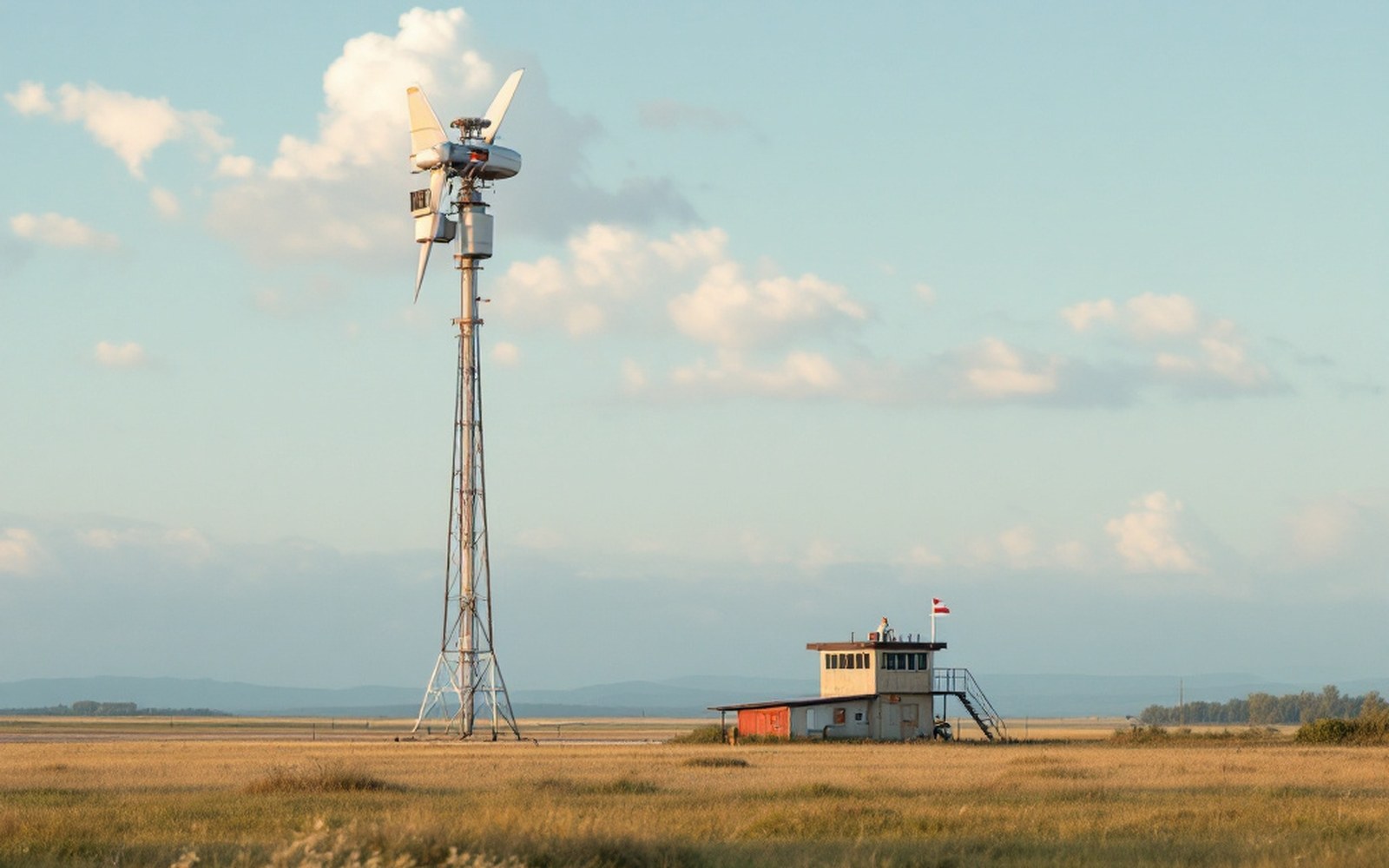
A field, not an airportA windsock and a low control building are most of the equipment an early aerodrome needed.
What Remained and What Was Built
Cuatro Vientos continued operating after Cierva moved the programme toward production, collaborating with CASA and attracting licence interest from Avro in Britain and Pitcairn in the United States. The aerodrome itself remained a working installation rather than a monument. Hangars were extended, the infrastructure deepened, and the site accumulated decades of operational use that sit on top of its early history like geological strata.
The Museo del Aire is now based at Cuatro Vientos, which gives the aerodrome a second life as the physical archive of Spanish aviation. The collection holds surviving airframes, instruments and documentation from the full span of Spanish aeronautical production. For anyone trying to understand what the early autogiro hardware actually looked like — the proportions of a rotor head, the way blade roots were attached, the overall scale of these machines — the collection at Cuatro Vientos is the place to look. What is preserved here is not a replica or a reconstruction; it is the material record, imperfect and sometimes fragmentary, of the engineering itself.
The aerodrome's runway and operational layout have changed considerably since the 1920s ↗, and the field today handles general aviation rather than experimental work. The plateau is still there, the wind still comes from multiple directions, and the basic reason the site was chosen — open ground, accessible from the capital, with enough room to get something into the air and observe what it did — remains as legible as it ever was. What changed is that the problems being solved in the air above this ground are no longer foundational. The foundational work was done here and then exported, via Cierva's presentations to international audiences and via the licence agreements that spread the flapping-hinge rotor across Europe and North America.
The Aerodrome as Evidence
There is a particular kind of historical significance that belongs to working sites rather than to preserved ones — a significance that accumulates through continued use rather than being frozen at a moment of achievement. Cuatro Vientos has this kind of significance. It is not a heritage site in the sense of a place that has been stopped and displayed; it is a place that kept going, and the 1923 flights are part of its continuous biography rather than the whole of it.
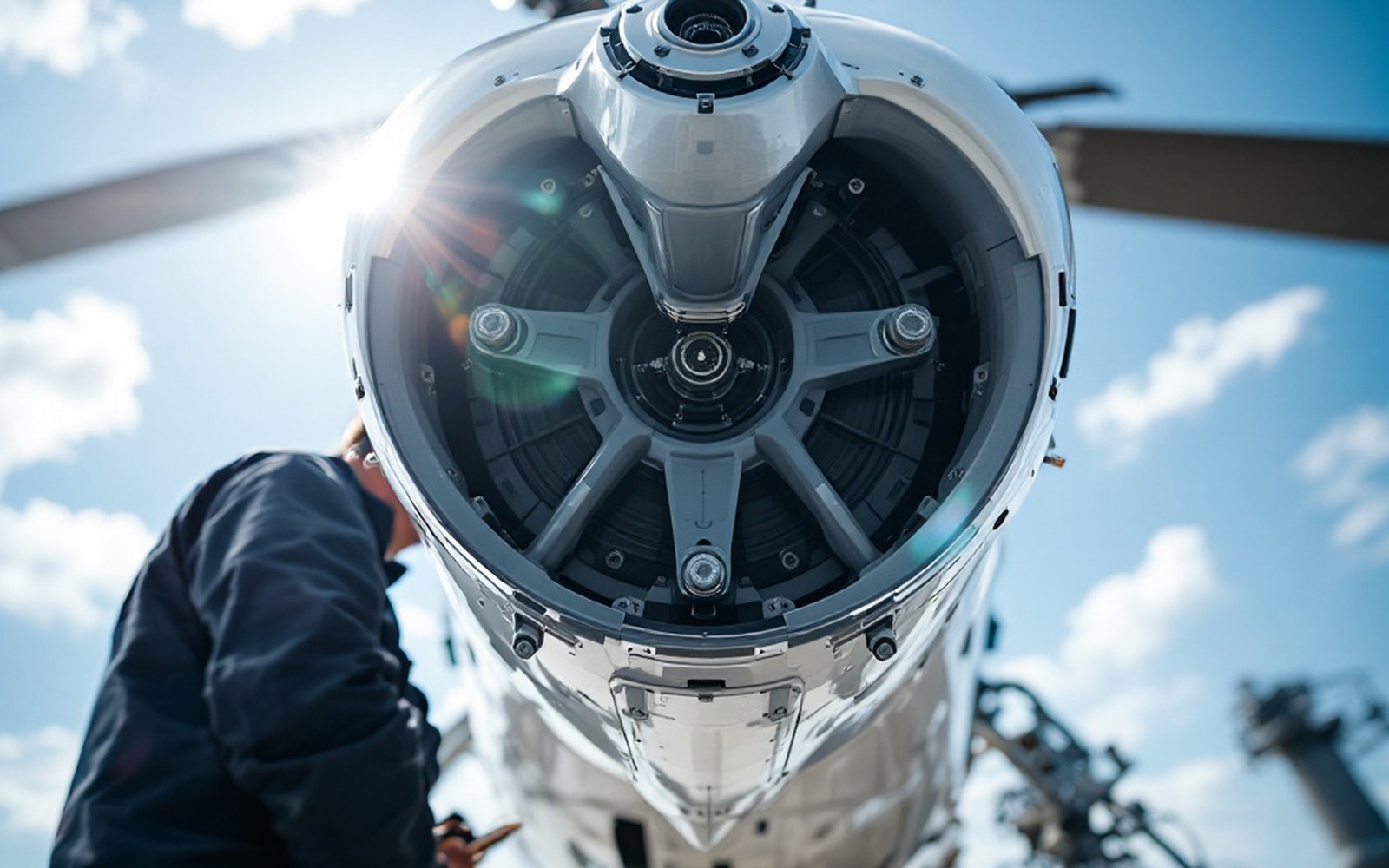
The hinge, in hardwareBlade roots and linkages on a rotor head: the pinned joints are what let each blade rise and fall on its own.
The combination of active aerodrome and national collection in one place is unusual enough to be worth noting. An aircraft in a hangar at Cuatro Vientos sits a few hundred metres from the ground it may have flown over. The spatial relationship between object and site is intact in a way that museum transfers rarely preserve. For the rotor historian, that proximity is not sentimental — it is evidential. The ground at Cuatro Vientos is where the argument between rigid rotors and free-flapping ones was settled, and the aerodrome carries that fact still.