Engineers/Test flying
Test flying
Each change had to be flown, usually by the people who designed it.

Flown by the people who drew itEach modification had to be taken up and tried, usually by the designer.
When the engineer is also the pilot
The gap between a drawing and a working aircraft is always measured in flight time — and for the autogiro's first decade, the people who closed that gap were often the same people who had drawn the geometry in the first place.
Juan de la Cierva was closely involved in testing his own machines from the start. The C.4, which completed the first sustained autogiro flight at Cuatro Vientos in January 1923, was piloted by Alejandro Gómez Spencer ↗, an experienced military aviator — but Cierva was present, watching, and the correlation between what he saw in the air and what he had predicted on paper was immediate and iterative. Each configuration change demanded a new flight. Each new flight fed the next configuration change. The cycle was tight and the margin for error was thin.
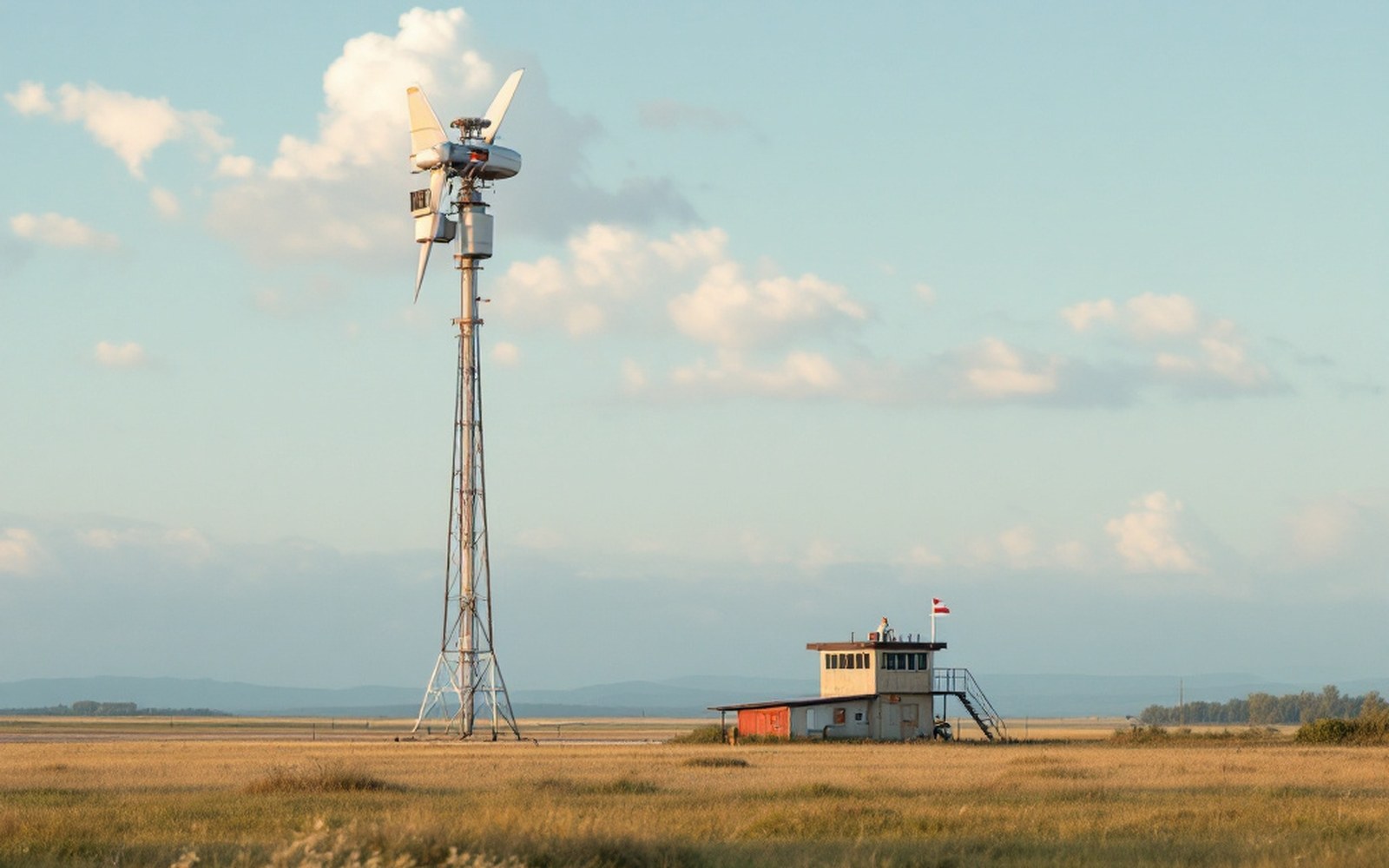
A field, not an airportA windsock and a low control building are most of the equipment an early aerodrome needed.
The core difficulty was that the rotor's behaviour in forward flight was largely invisible from the ground. Dissymmetry of lift — the imbalance between the advancing blade, which sees high relative airspeed, and the retreating blade, which sees much less — had destroyed earlier designs by overturning them. Cierva's solution, the flapping hinge, allowed each blade to rise and fall independently, averaging out the aerodynamic forces across the disc. That solution existed as a mechanical fact before anyone had flown it; whether it actually cured the roll was a question only flight could answer.
What made autogiro test flying particularly demanding was that almost every variable was new. There was no inherited wisdom about rotor head loads, no fleet of similar machines whose maintenance records could be consulted. The first time a flapping hinge fatigued in flight, there was no precedent for what happened next. Pilots who flew these machines were working at the boundary of available knowledge, not beyond the boundary of personal courage — the distinction matters, because the decisions they made were engineering decisions as much as airmanship ones.
Emilio Herrera Linares, the Spanish aeronautical engineer who contributed to early rotorcraft thinking, came from precisely this tradition of observation-led enquiry: watching a machine's behaviour and reading it back into the theory. The method was not unique to Spain, but Spain is where the rotor problem was being solved, and Cuatro Vientos and Getafe were the fields where successive Cierva designs accumulated flight hours and uncovered the next problem.
The progression was methodical even when it looked improvised. A blade pitch change on the C.6 series, a modified hub geometry on the C.8, a new direct-control arrangement on the C.19 — each step was a test, and each test either validated a prediction or produced a new datum to explain. When a machine behaved unexpectedly, the pilot's account of what the controls felt like was itself a measurement. No instrument could yet capture what a rotor disc was doing in three dimensions at the moment of a gust; the pilot's hands and inner ear were the sensors.
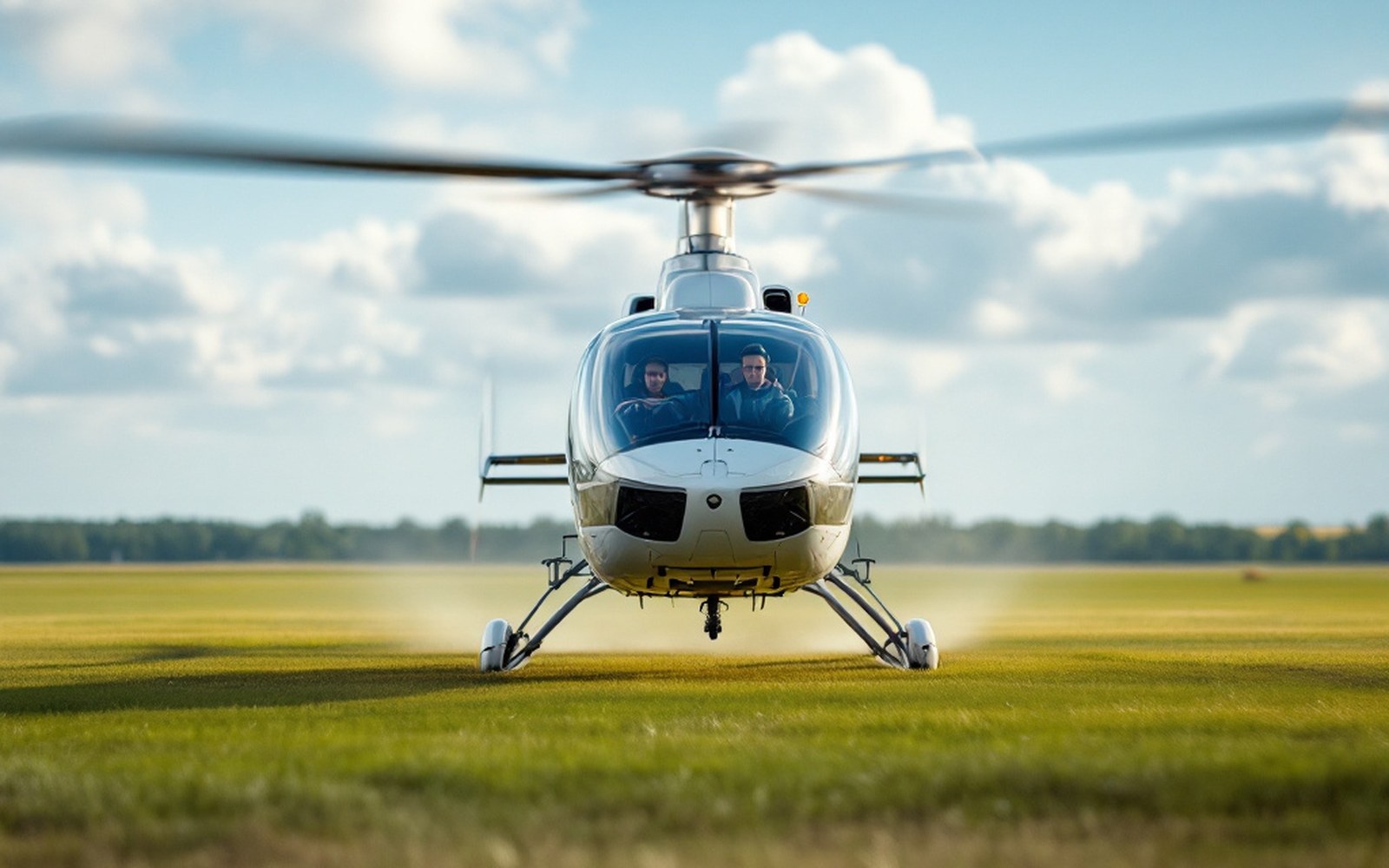
Spun up on the groundRotor speed is built with the machine standing still, then converted into lift by a change of pitch.
Autorotation — the self-sustaining rotor spin that makes an unpowered autogiro descend safely — was demonstrated to the Royal Aeronautical Society ↗ in London in 1925, and the demonstration was itself a test: Cierva needed to show, in controlled conditions with witnesses present, that the phenomenon he had designed for was real and repeatable. It was. But repeatability was still earned flight by flight, not assumed.
By the 1930s, test flying practice had grown more structured: instrumentation improved, cockpit notes were formalised, and the separation between designer and pilot — already blurring in Cierva's case — became more explicit. But the autogiro's foundational engineering was worked out in the earlier mode, where the person who had decided what the machine should do then climbed in to find out whether it did. That proximity between calculation and consequence is part of what makes the autogiro's development history so compressed and so clear: each problem has a name, a machine, a field, and a flight.