Rotorcraft/Autorotation
Autorotation
An unpowered rotor keeps turning in the airflow as the machine descends, which is what makes the whole configuration safe rather than merely clever.
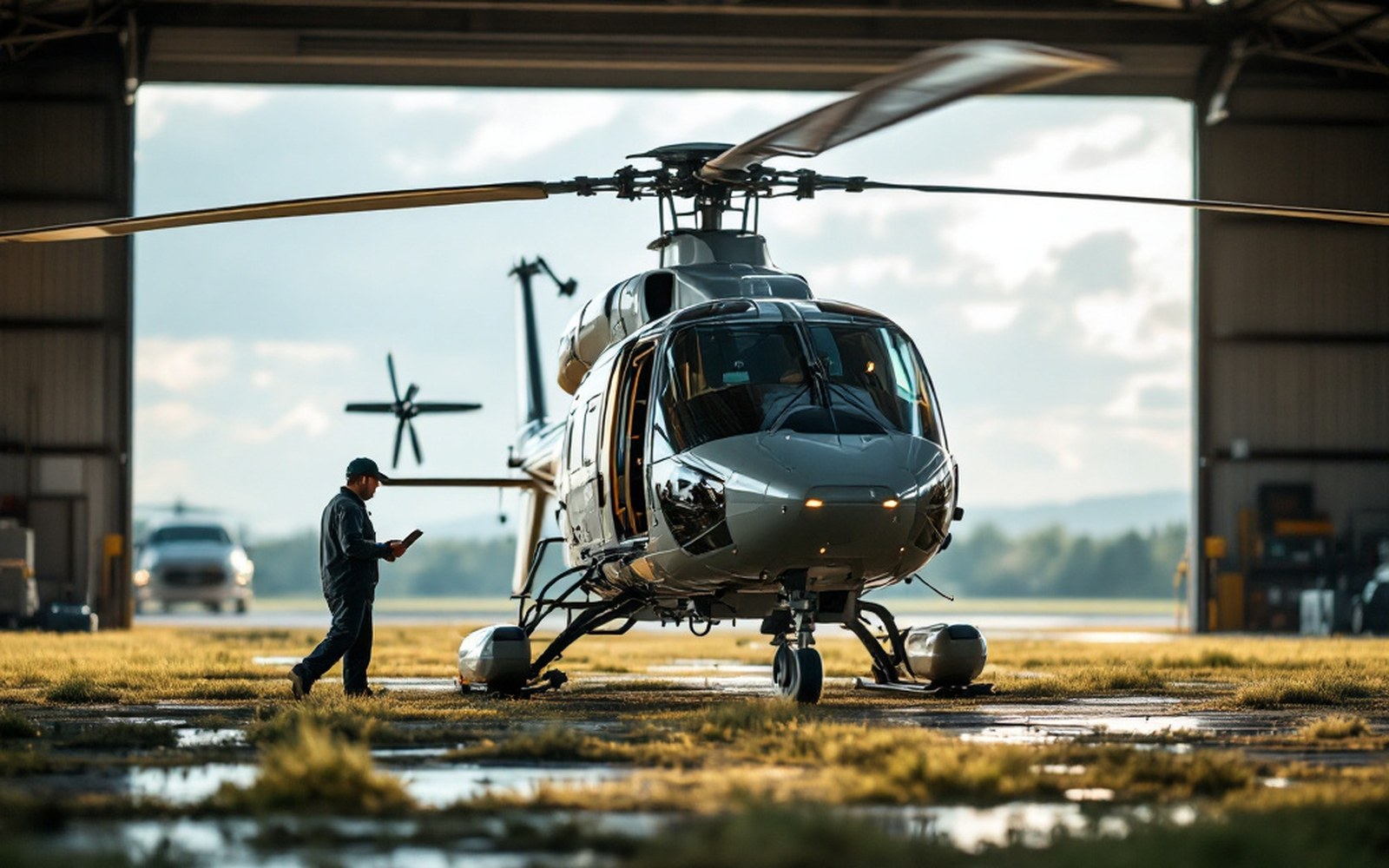
Turning on the airflow aloneWith no drive to the rotor, descent through the air is what keeps the disc spinning.
The air does the work when the engine cannot
An autogiro does not glide in the way a fixed-wing aircraft glides. When a conventional aeroplane loses power, its wings continue to generate lift as long as airspeed is maintained — and airspeed decays with it. An autogiro does something more useful: its rotor keeps turning without any engine input at all, driven entirely by the upward flow of air passing through the disc as the machine descends. The rotor is not windmilling passively; it is generating lift, slowing the descent, and remaining in full aerodynamic health. This is autorotation, and it is the property that made Juan de la Cierva's configuration worth pursuing beyond the first few encouraging hops.
The principle was not invented to serve an emergency. It is the machine's normal condition. In an autogiro, the rotor is never engine-driven in the way a helicopter's rotor is. The engine turns the propeller; the propeller pulls the aircraft forward; the forward motion combined with the downward component of flight drives air up through the rotor disc; and that airflow sustains the rotor's rotation and produces lift. Remove the engine entirely and the aerodynamics of the rotor do not fundamentally change — the nose goes down a little, descent rate increases, but the rotor keeps turning and the machine keeps flying, right to a controlled landing. That is the structural argument for the autogiro's safety case.
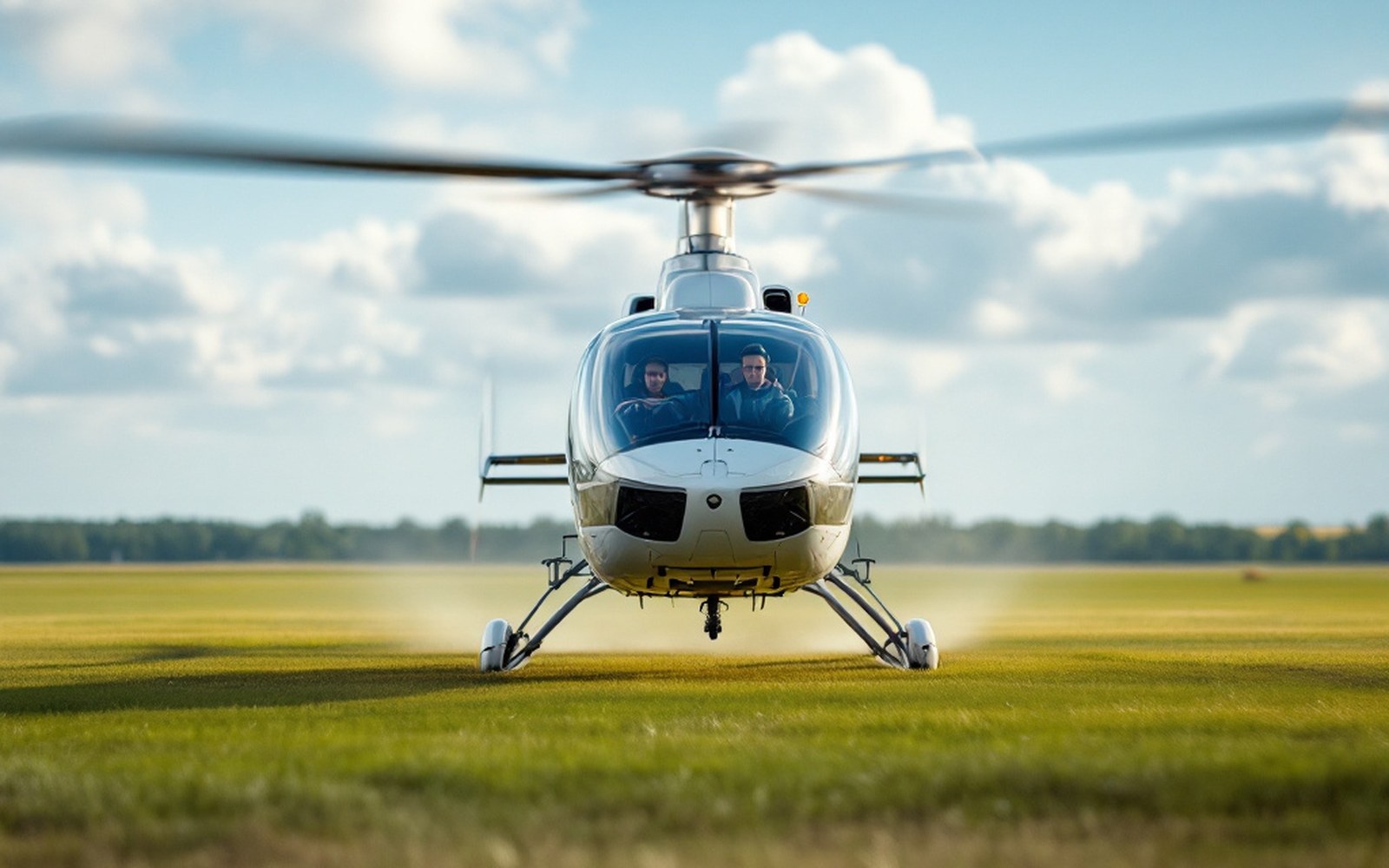
Spun up on the groundRotor speed is built with the machine standing still, then converted into lift by a change of pitch.
What the airflow is actually doing
To understand why the rotor keeps turning unpowered, you have to follow the airflow through a single blade. In powered flight the rotor of a helicopter is forced around by the engine, and the blades are set at a positive pitch angle relative to the plane of rotation — they push air downward to generate lift, but the drag they produce must be overcome by torque from the engine. In autorotation the geometry reverses. The blade is moving relative to the air in such a way that the net aerodynamic force on it has a forward component — that is, the force that would be drag in another context is instead tipping forward of the rotation axis and accelerating the blade rather than retarding it.
This happens because the relative airflow arriving at each blade section comes partly from the blade's own rotational velocity and partly from the upward flow of air through the descending disc. The vector sum of those two components strikes the blade at an angle of attack that places the resultant lift force slightly forward of perpendicular to the disc plane. The forward tilt of that force drives rotation. The system is self-regulating: if the disc slows, the angle of attack increases and the forward tilt of the force grows, accelerating the rotor back toward its equilibrium speed. If the disc speeds up, the angle of attack reduces and the accelerating component diminishes. At equilibrium rotor rpm, the driving forces across the disc exactly balance the retarding ones, and the rotor maintains steady speed without any mechanical input at all.
This equilibrium is not uniform across the rotor disc. Inboard blade sections, moving more slowly, operate in a regime where the aerodynamic force is still rearward — they are being dragged, and their drag is paid for by the outer sections, which are the real drivers of rotation. The boundary between the two zones shifts with descent rate, rotor rpm and blade pitch. Understanding exactly where that boundary sits, and how to manage it through blade geometry, occupied Cierva and his colleagues at Cuatro Vientos through the early 1920s and informed everything that followed.
Steady state, entry and the landing flare
A rotor in stable autorotation is well-behaved. The interesting engineering — and the operational discipline — lies in the transitions: entering autorotation cleanly, and trading accumulated rotor energy for a reduced-impact landing.
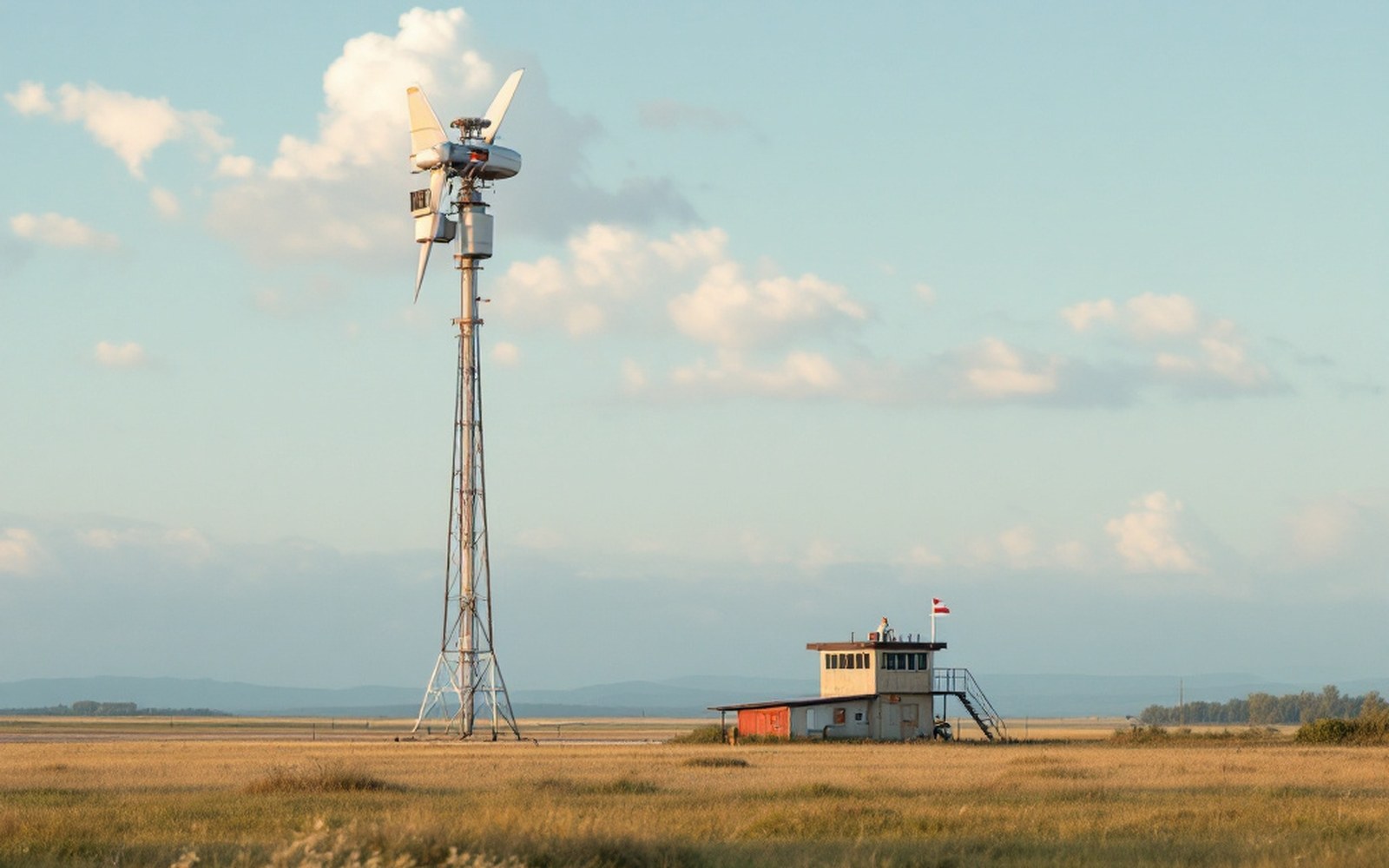
A field, not an airportA windsock and a low control building are most of the equipment an early aerodrome needed.
Entry is clean in an autogiro because the rotor is already autorotating in normal flight. There is no transition to manage. The pilot throttles back, the nose lowers slightly, and the descent rate settles. In a helicopter, where the rotor is engine-driven, the entry to autorotation requires an immediate reduction in collective pitch to prevent the rotor from decelerating rapidly as it is no longer being driven — a procedure with a narrow time margin. The autogiro sidesteps that problem entirely because the rotor is aerodynamically decoupled from the engine in normal operation; the emergency power-off condition is simply normal flight with the engine at idle.
What the autogiro pilot does share with the helicopter pilot is the management of rotor inertia at the moment of landing. As the machine descends through the last few metres, the pilot can raise the nose, increasing the angle of attack of the blades and briefly increasing lift — a flare — which arrests the descent rate and converts some of the rotor's stored rotational kinetic energy into a reduced sink rate. Done well, the touchdown is gentle even from a steep approach. This technique was refined through test flying at Cuatro Vientos and later at the airfields at Getafe and Tablada ↗ where successive Cierva prototypes were evaluated by pilots working through the machine's handling characteristics with no prior template to follow.
What the disc looks like from outside
An autorotating disc has a characteristic appearance that distinguishes it from powered flight. The rotor plane tilts slightly rearward relative to the fuselage axis, and the disc loading — the lift per unit area of rotor disc — is lower than in comparable powered flight because the machine is descending and the upward airflow through the disc is doing part of the work. Dissymmetry of lift remains present: the advancing blade still sees more airflow than the retreating one, and the flapping hinge is still the mechanism that prevents the unequal lift from rolling the machine over. The flapping hinge remains essential in autorotation for exactly the same reason it is essential in powered flight — the asymmetry of the flowfield does not disappear when the engine stops.
Blade pitch in autorotation is fixed in the original Cierva designs, which simplified the aeromechanics considerably. Later developments introduced variable collective pitch, which allowed the pilot to manage the energy in the rotor disc more actively, and this opened the path toward the jump take-off — spinning the rotor faster than its autorotation equilibrium and then raising pitch to convert that excess energy into a brief vertical climb. But even in its simplest form, with fixed-pitch blades and a windmilling disc, autorotation gives the machine its defining safety characteristic.
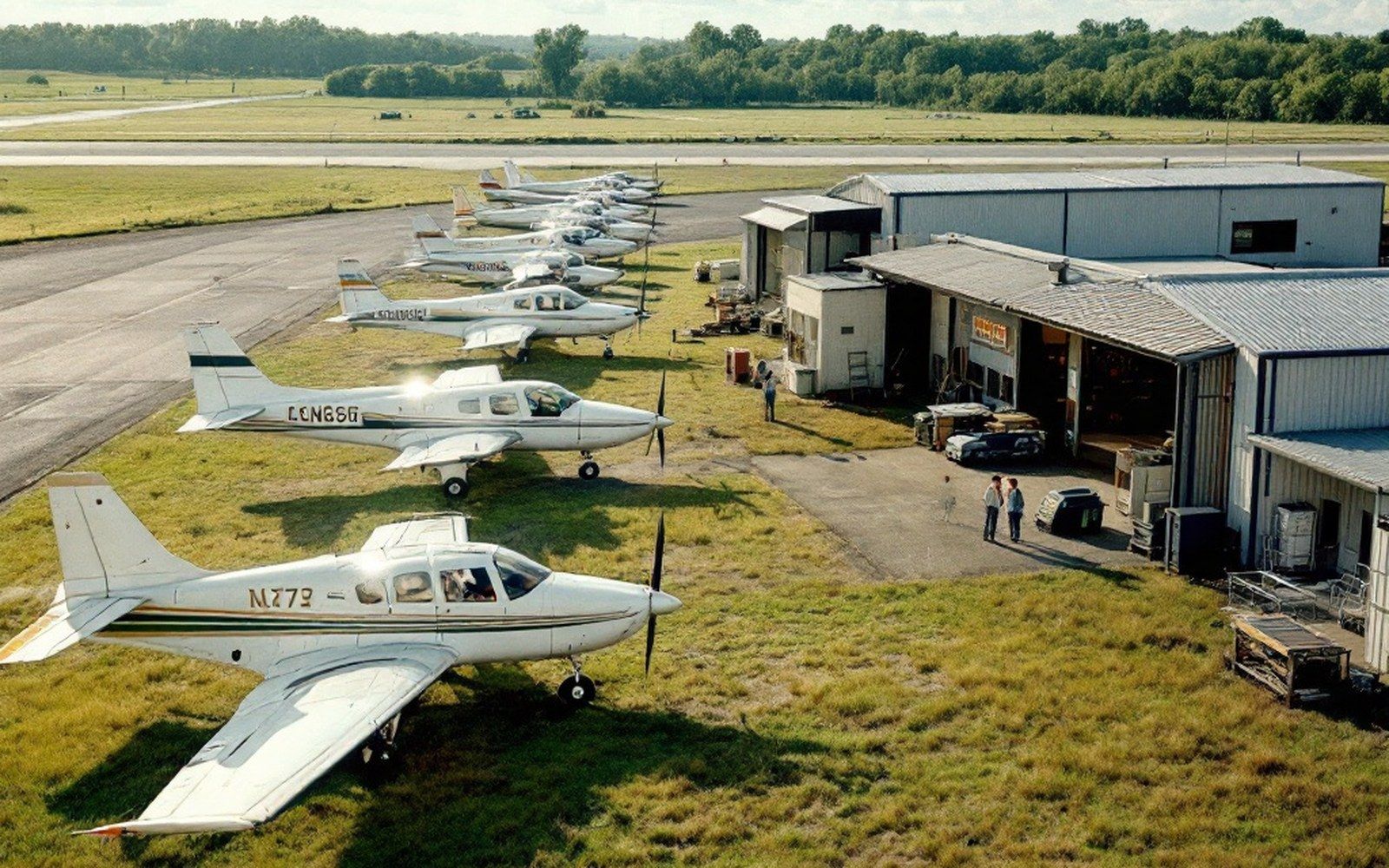
The living collectionLight aircraft on grass and the schools that maintain them: rotor training still happens here.
The Museo del Aire ↗, which holds surviving Cierva-lineage machines, preserves physical evidence of the rotor geometry that Cierva worked out: blade section shapes, hinge arrangements and pitch settings that reflect the aerodynamic reasoning developed across a decade of test flying. The rotor head on a preserved autogiro is not an elegant simplification of helicopter technology; it is the original solution to a problem that the helicopter, arriving later, had to solve in a different way. Autorotation was not borrowed from the helicopter. The helicopter borrowed it from the autogiro — and had to work considerably harder to make it available on demand.