Rotorcraft/Dissymmetry of lift
Dissymmetry of lift
On a rotor moving forward, the blade going into the wind meets far more air than the blade going away from it — and if nothing corrects that imbalance, the machine rolls.
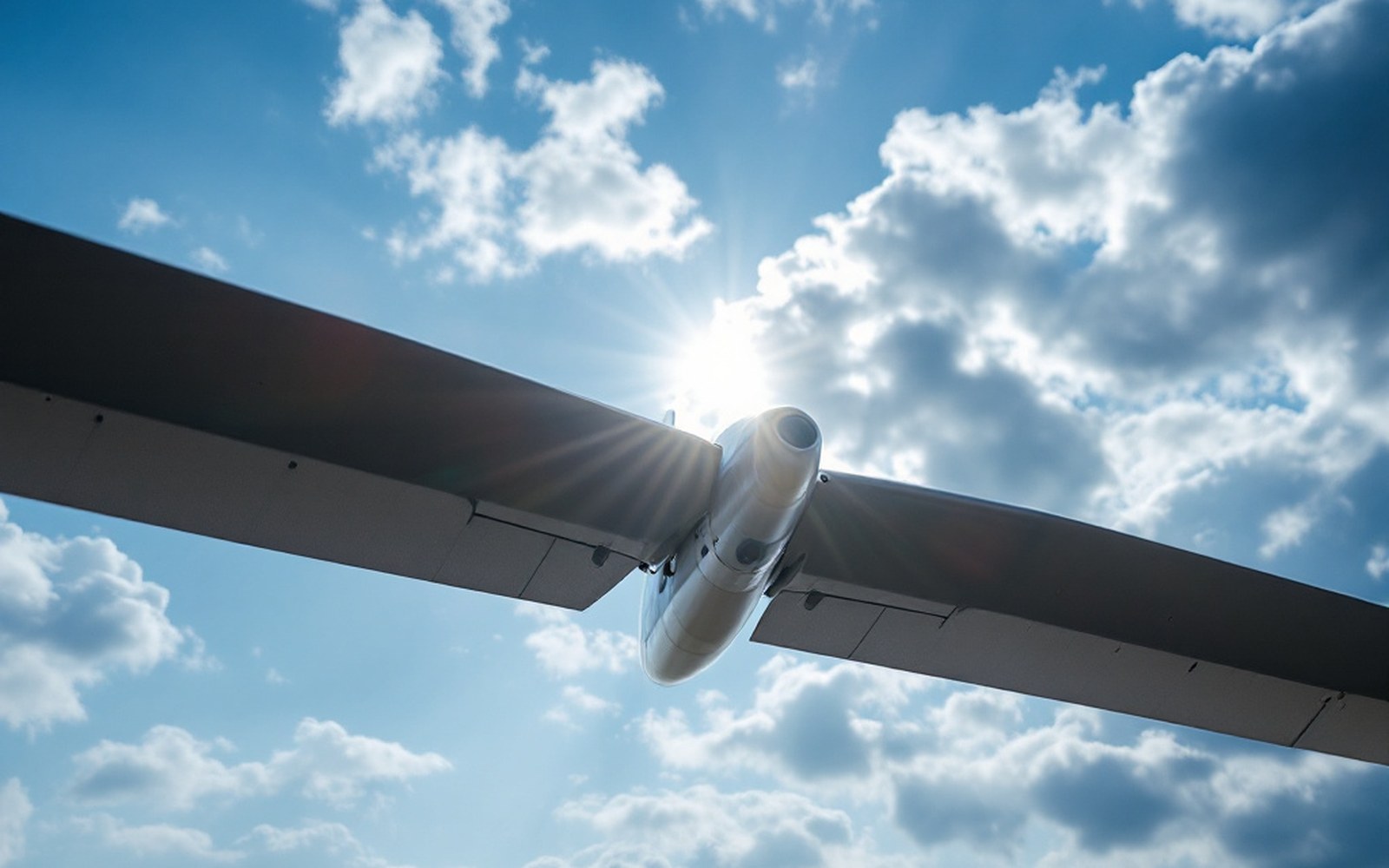
One side does more workSeen end-on the blade is an aerofoil; its lift rises with the square of the airspeed it happens to meet.
The arithmetic of an unequal disc
A rotor blade generates lift the same way a fixed wing does: by moving through air fast enough that the pressure difference across its aerofoil section produces an upward force. The critical word is fast. The lift produced by any aerofoil rises roughly with the square of its airspeed, which means that even a modest difference in velocity between two blades produces a large difference in the force they carry.
In a hovering machine this is not a problem. Every blade sweeps through the same air at the same speed relative to the air, and the disc is, in aerodynamic terms, symmetric. The moment the machine begins to move forward, that symmetry collapses. The blade sweeping forward — the advancing blade, on the advancing side of the aircraft — now adds the machine's forward speed to its own rotational speed. The blade sweeping rearward subtracts that same forward speed from its rotational speed. At low airspeeds the difference is manageable; as the machine accelerates, the gap widens rapidly. The advancing blade can be working in airflow two or three times as energetic as the retreating blade is meeting, and since lift scales with velocity squared, the imbalance in force across the disc becomes severe.
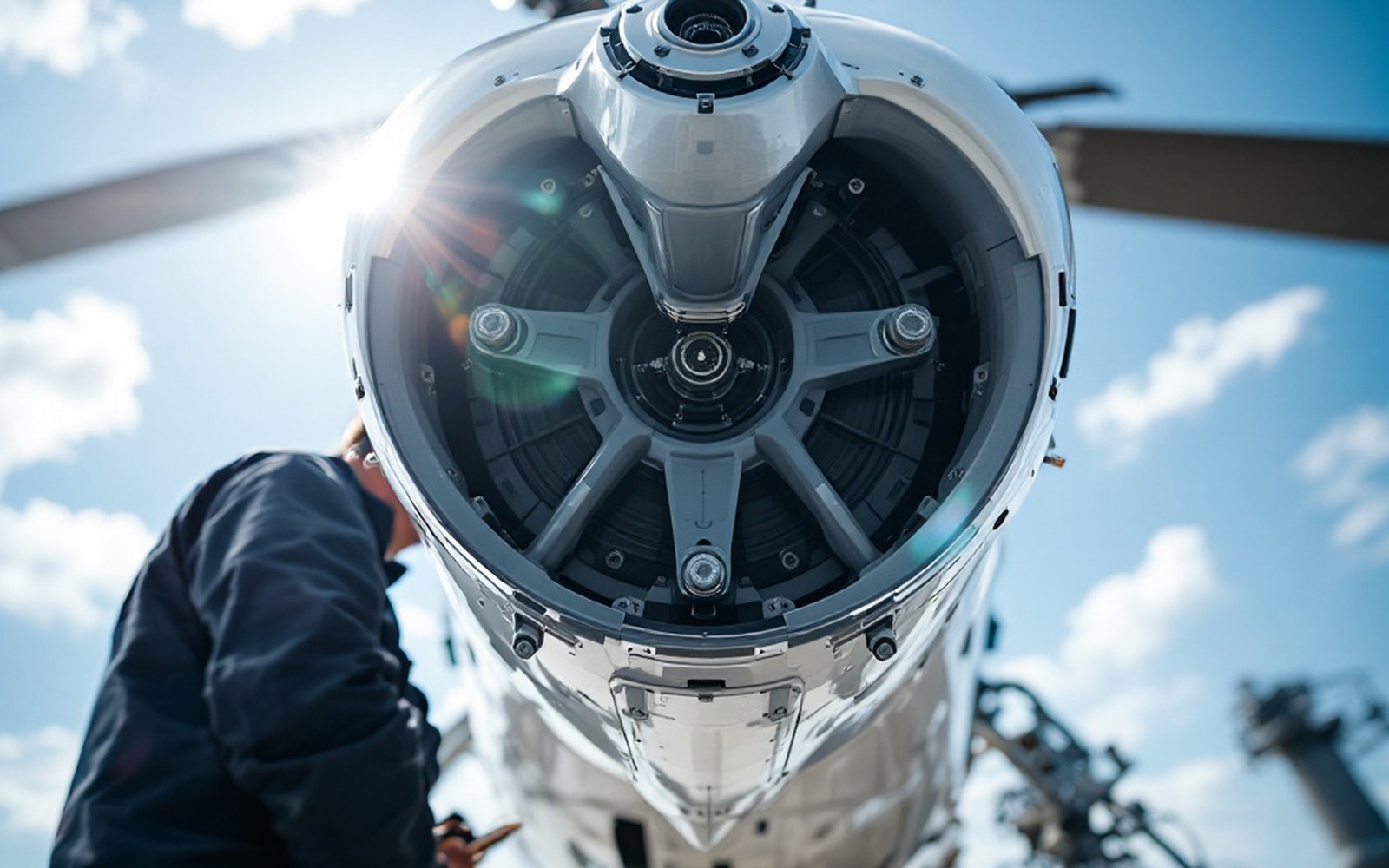
The hinge, in hardwareBlade roots and linkages on a rotor head: the pinned joints are what let each blade rise and fall on its own.
The result, uncorrected, is a powerful rolling moment toward the retreating side. In early unpowered rotorcraft — autogiros in their first configurations — this showed up as an asymmetric disc that threatened to tip the machine onto its retreating side as forward speed built. Juan de la Cierva encountered this directly in his early machines at Cuatro Vientos in the early 1920s, where forward flight consistently produced a rolling tendency that no conventional control input could fully overcome. The aerodynamics were not mysterious once stated, but the engineering fix was not immediately obvious.
What the blade actually sees
To understand why the fix works, it helps to track a single blade through one revolution. At the position where the blade points directly out to the advancing side, at right angles to the direction of travel — the three o'clock position if the aircraft is flying toward twelve — it is advancing, and its total airspeed is rotational speed plus forward speed. A quarter turn later, pointing directly forward, it is moving across the flight path and the forward-speed component adds nothing. At the nine o'clock position it is retreating, and its total airspeed is rotational speed minus forward speed. On a fast autogiro this retreating tip speed can fall low enough that the outer portion of the blade barely contributes to lift at all, while the advancing tip is working extremely hard.
The blade does not know any of this as a global problem. It only knows what the local airflow is doing at each instant. The engineering challenge is to make the blade respond to that local airflow in a way that equalises the lift around the disc — automatically, continuously and without pilot input — across every condition of speed and loading.
The hinge as the answer
De la Cierva's insight, developed through a sequence of machines and tested in flight, was that the blade should be allowed to move freely in the plane perpendicular to the rotor disc — to flap up when it is producing excess lift and flap down when it is producing less. This is the flapping hinge: a pivot at the root of each blade that decouples the blade's spanwise position from the rigid hub.
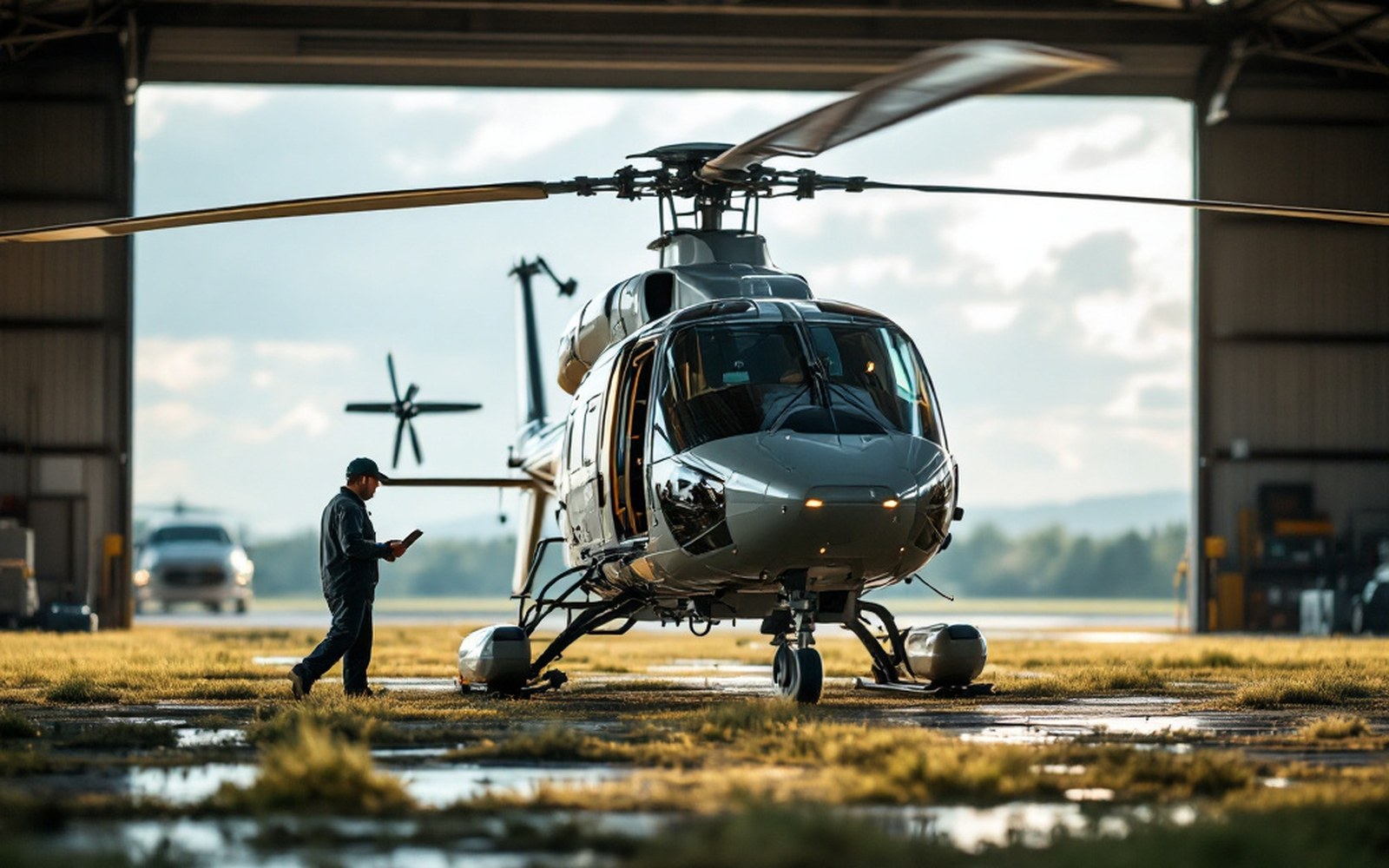
Turning on the airflow aloneWith no drive to the rotor, descent through the air is what keeps the disc spinning.
The mechanism by which this corrects dissymmetry is elegant. When the advancing blade generates surplus lift, it flaps upward. As it rises, the angle between the blade and the oncoming airflow decreases — the effective angle of attack falls — and the lift drops back toward equilibrium. When the retreating blade generates less lift, it flaps downward, its angle of attack increases, and lift rises. The rotor thus corrects itself, continuously and automatically redistributing load around the disc with each revolution.
The Museo del Aire collection includes examples of rotor heads from different generations of Cierva-derived machines, and the progression from rigid to hinged to articulated assemblies is physically legible in the hardware. What a photograph can suggest, a sectioned head demonstrates precisely: the pivot is a simple bearing, but its position and its freedom of movement are the result of careful geometric reasoning about where the blade's aerodynamic centre and its mass centre meet.
Limits and the retreating blade
The flapping hinge solves the rolling moment, but it does not make the retreating blade's low airspeed disappear. At high forward speeds the retreating blade's outer span can reach a condition where the airspeed is so low that no useful angle of attack — short of stall — generates enough lift to balance the advancing side. This retreating-blade stall is the aerodynamic ceiling on forward speed ↗ for any rotorcraft, autogiro or helicopter. The flapping hinge pushes that ceiling upward by managing the load distribution gracefully, but it cannot eliminate the physics.
Cierva's later development work, conducted partly in collaboration with engineers including Alejandro Gómez Spencer and with manufacturing support from CASA, addressed this through refined blade geometry and, eventually, through varying the pitch of each blade individually as it moved around the disc — the principle behind what later became cyclic pitch control ↗. The autogiro could not adjust pitch cyclically in the way a helicopter's swashplate does, but understanding why the disc needed that kind of correction — blade by blade, position by position — was part of the intellectual work the autogiro's development forced into the open.
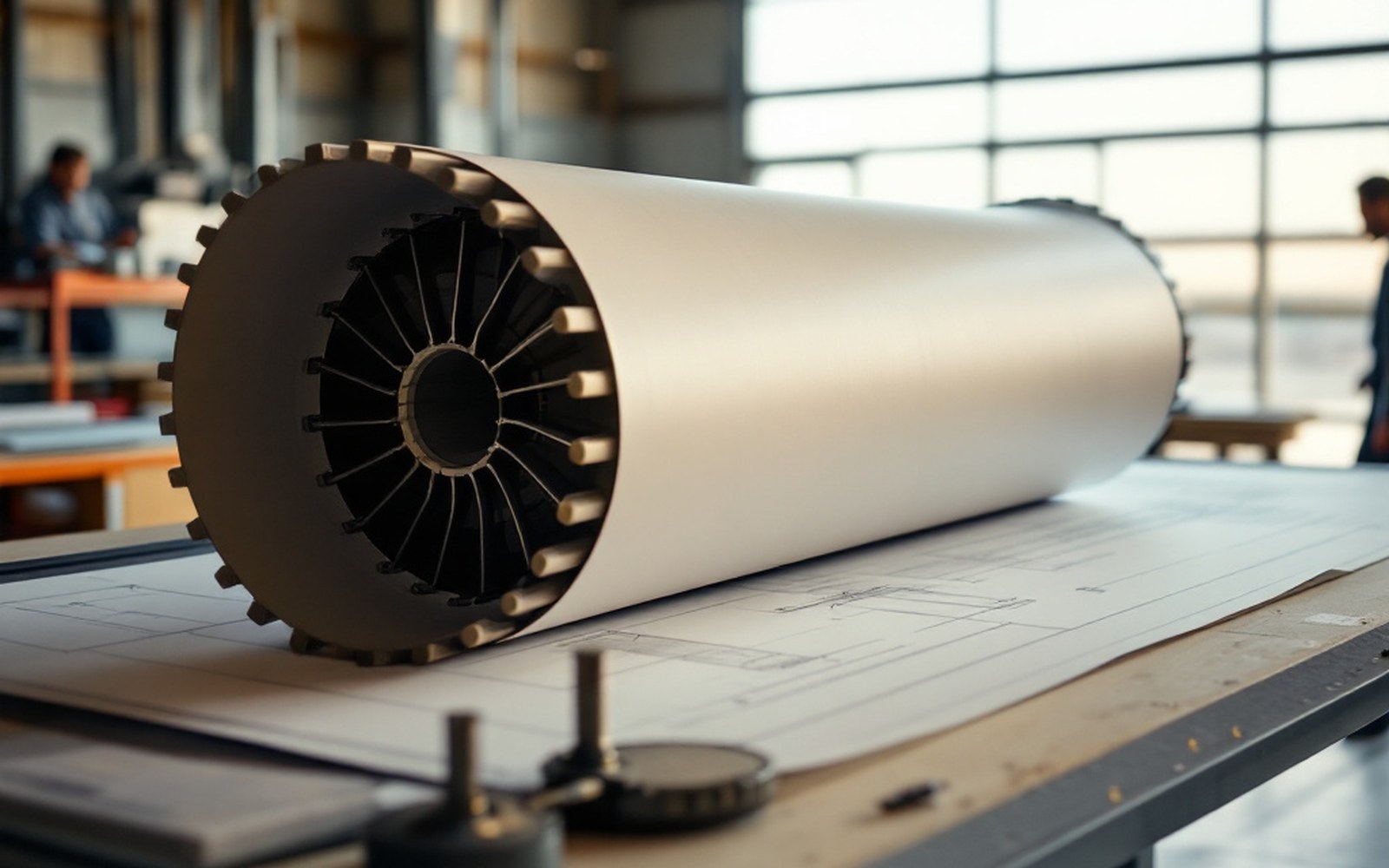
Geometry firstRotor design was argued on paper before it was flown; the drawing carries the dimensions that mattered.
Why the problem matters beyond the autogiro
Dissymmetry of lift is sometimes presented as a helicopter problem that the autogiro also happened to face. The history runs the other way. It was the autogiro that made the problem tractable, because the autogiro's unpowered rotor autorotates rather than being driven, which strips away one layer of complexity and makes the aerodynamic behaviour cleaner to isolate and observe. The flapping hinge, developed to solve dissymmetry in forward flight, became the foundational mechanism of all subsequent rotorcraft. The problem was identified in Spanish airspace, in machines built and flown by Spanish engineers, and the fix they devised is still at work in every rotor turning today.